

The Greatest Investment You Can Make as an Elk Hunter...YOUR KNOWLEDGE!

Table of Contents

COMPONENT - 5

Finding Elk

There are multiple parts or phases of an elk hunt that you need to be prepared for; Planning , Preparing, Going, Hunting, Killing, Breaking down, Packing out & Processing.

Up to this point, even though there is definitely overlap in phases when it comes to creating an opportunity, most of the content in this course has been about helping you with the killing part and creating and closing the deal. In other words, what you do once you have located fresh sign that tells you an elk is close or you found a target animal or

animal through sight or sound. Then we covered what calls to use and how to

respond, how to set up, how to get in the red zone and then how to finish. These are all about killing effectively, efficiently and ethically. How to turn an encounter into a harvest.

However, before you can kill an elk, you have to find an elk. For a bowhunter, that’s half the battle. For a rifle hunter, that percentage goes up even more.

In addition, before you can find an elk, you need to; 1) decide on an elk State to hunt, 2) decide on a hunt unit, public or private land within that State that has elk, 3) acquire the needed tags or license  4) Locate places within that unit that elk may be located and then finally 5) go find an elk.
Because the first three steps above are dealt with elsewhere in this course, the focus and goal of this module is about giving you the skill sets once you have boots on the ground either days before or during your actual hunt.

But when it comes to “finding elk”, this is where the HUNTING part comes in. This my friends, is where you find out how good of a HUNTER you really are. It’s the ability to locate and then find elk that separates the folks with tags in their pockets and those that are hiking and hoping, from the good elk hunters that get the occasional harvest, to the great ones that are punching those tags year in and year out. Locating and finding elk is about boots on the ground and how well you understand the animal’s needs. How they think, habits they have that you can exploit, understanding the signs they leave behind, and they best places to find those signs. How to read those signs and how to incorporate ALL your senses throughout the entire process.

What you are about to learn would take most hunters years, if not decades of season after season of frustration and lots of trial and error, before they have those ah-ha moments. Those realizations when things finally begin to come together. And in all honesty, once you learn to look at the problem from a different angle, locating and finding elk is not as difficult as it seems. Finding elk is not just about looking. It’s more about seeing and understanding. 

But more on that later. 

Let’s get after it y’all. But before we jump into the meat and potatoes, we need to get lined out. First off, let’s get the head right!
First, Let's Get The Head Right!

Our brother Gilbert Ornelas is known for one of his sayings… ” You better get that crap out of your head right now!” And it’s always good for a laugh, but he definitely gets his point across. For this part of the course, I’m going to take a very similar stance for what’s coming up; “You had better get this crap INTO your head, RIGHT NOW!” From the very beginning, there are certain factors of elk hunting that you have to get into your head right from the git-go if you want to have success:

1. IT HAPPENS FAST – There are thousands of elk hunters every year that talk about the “one that got away” because they simply had lost focus and were not ready when their chance presented itself.  I’ve heard so so many hunters explain how a prime opportunity got blown because “it happened so fast”. Meaning that they went from hunting to hiking and got caught with their pants down. Easy to do, but it can cost you. Which relates to number two:

2. FROM ZERO TO HERO – Never forget your goal is to have an opportunity and then make it count. IT ONLY TAKES ONE OPPORTUNITY. You can hunt day after day, hour after hour, mile after mile and never come across an elk in multiple days, hours and then… within minutes IT CAN ALL CHANGE! It’s for that exact moment, that one opportunity, that you are hunting. Sure, we all want multiple opportunities to be able to increase our odds. But remember, it only takes one and you have to keep that in your head… ALL THE TIME!

3. YOUR HUNTING ELK, NOT BUGLES – Look, it’s great to have elk screaming and leading you right to them. Or better yet, to have them coming to you. But to be consistently successful, your skill set has to be beyond that. If you can kill a quiet elk, you can kill any elk. Consistently locating and finding elk goes beyond calling and hoping for a response. It means combining your ability to find and recognize sign using ALL of your senses. To understand an elk’s behaviors, instincts and needs and how it relates to the area features you are hunting. Know the animal’s strengths and weaknesses and know how to exploit those weaknesses. Love to hunt the animal y’all and all the extra vocalizations just become icing on the cake!

4. IT’S BIGGER THAN YOU THOUGHT – We are going to discuss this more here directly, but for most people that have never experienced it, the mountains, canyons or country you will be hunting will be bigger, steeper and tougher than you ever imagined. Expect it and prepare mentally and physically for it and you won’t suffer from sticker shock. More to come.

5. ELIMINATE, VERIFY, HUNT – If you look at the country as a whole, it’s daunting and intimidating. Finding elk is about knowing the features and areas to look for and gathering information. You also eliminate tons of area in the process and gain an understanding and verifying where they are and where they are not.

6. LOCATING ELK AND FINDING ELK ARE DIFFERENT – Yes, it’s semantics and you might wonder why is this even important? Y’all, it’s everything! The problem is that a large majority of hunters try to “find” elk, or have an encounter, without having any idea first of where they might be located. They have no plan other than to jump on a trailhead or two then track and hunt bugles. They hope to have an encounter by hiking mile after mile in HUGE country without the understanding of how to eliminate huge amounts of that country and focus on the areas that attract elk. This is one of the big contributing reasons as to why 90 percent of elk hunters fail to punch a tag each year. More elaboration on this coming shortly!

These points above are the short and sweet of it. Major points for you to live by in the elk woods that take most elk hunters a lifetime to realize and understand. With that said, Before we start talking about actually finding elk, lets make sure that you have our head in the right place while also giving you the tools to help understand and overcome the very things that limit so many elk hunters ability to locate and find elk. 

Here we go!

Yep, It's BIG!

I hear this from so many first time elk hunters… “It was SO HUGE, SO INTIMIDATING!”. When I hear that, it just makes me smile because I totally get it. Especially because it’s not just first time elk hunters that experience this. Anyone that has e-scouted an area before getting boots on the ground has experienced “Topo Shock”. That quick realization that the topo lines that looked to be an easier walk from point A to point B… well…THEY LIED! Not only was the hike more steep and difficult, but there could be a cliff or a drop off that those daggum topo lines never told you about!

Now I am being a bit overdramatic here and if you were to have a high quality topographical map that you know how to read, you should be able to differentiate between more level areas, steep areas and REALLY steep areas. But the point I want to make is that not all topo maps are the same in the degree of detail of the areas you are scanning as a possible route or hunt location. Trust me when I say it can be an eye opener, to say the least, when you have the real thing in front of you.

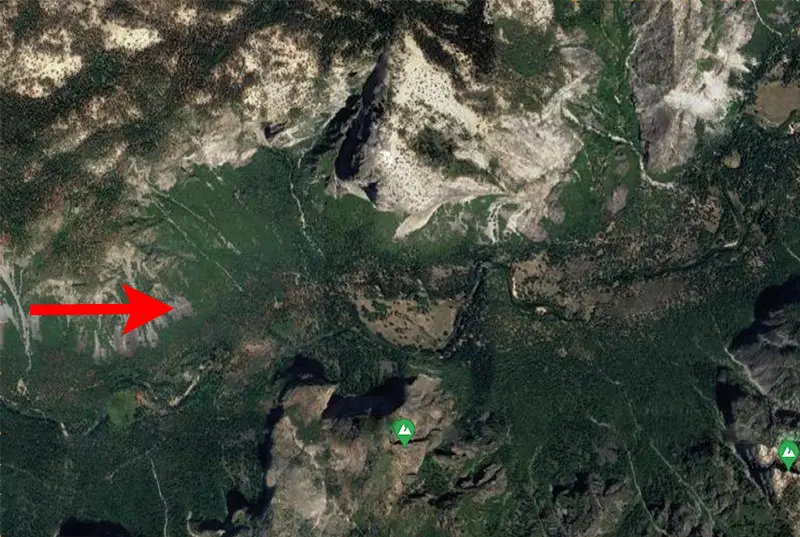
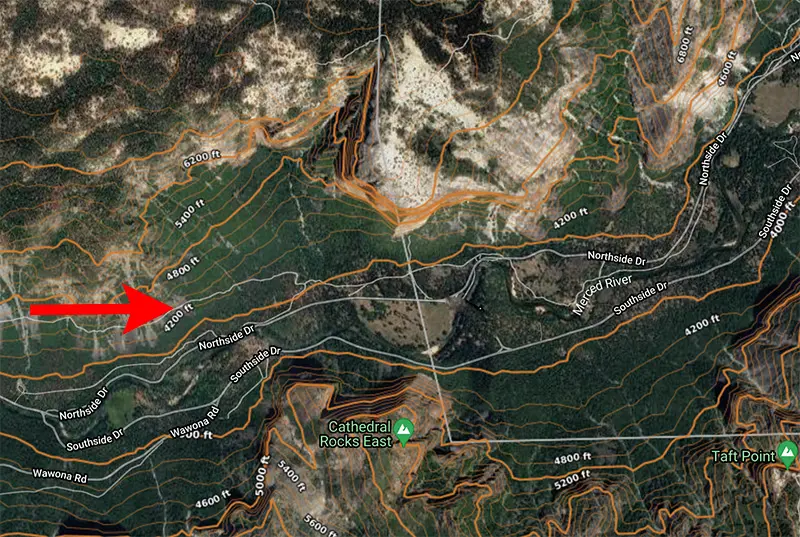
Below is an example of what I am talking about: 

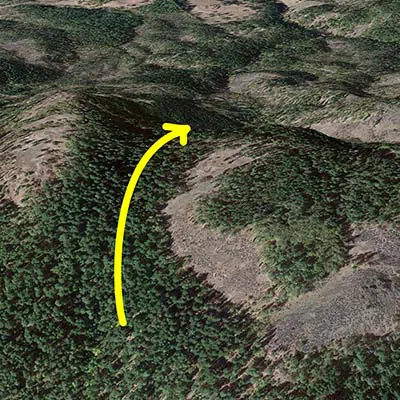
EXAMPLE A: Here is an example of an area shown with 3D shadows to help give you a feel for an area you want to hunt. You are traveling and viewing from the same path of the arrow. How do you envision the area?

EXAMPLE B: You are still coming in from the same direction and you now have topo lines. How do you envision this area now? What are you seeing in front of you? To the left? To the right? Difficulty level?  

Did you imagine the area to look like this?

Place your cursor here to see the location

In the example above I added the climbers just as a point of perspective that is hard to imagine even in this incredible photograph. And using “El Capitan” in Yosemite was definitely waaaaaay extreme to say the least. But the difference in what you “think” you may be looking at and the reality of a situation is spot on. I want you to understand that the country you are going to be hunting will almost always be bigger and steeper than you imagined it. If you know and prepare both mentally and physically for that fact, then you will have just slightly mitigated that ‘WOW” factor.

In this video below, I will show you some other ways to get a better feel for the country you are hunting using other map tools prior to your hunt.

Locating vs Finding

Before you can kill an elk, you have to 1)locate where elk are or 2)visually or audibly locate elk, then 3)find a way to have an encounter and finally 4)create a shot opportunity.

All of those factors come under the category of “Finding” elk. But for the purposes of getting the head right and coaching you, even though the two words can mean the same thing or be interchanged, I am going to distinguish between “locating” and “finding” for parts of this module.

First off, as you can probably tell, I’m no English teacher, lol. So, I’m not telling you to change how you use the words in the woods or when talking to others. This entire module is about “Finding Elk”. I’m only doing this so that you grasp the phases that help you break down the process. Learn the different parts that make up or control the decision making during or before an elk hunt. So let”s start with the two general phases.

Phase One: Locating
This occurs in different ways during the Planning and Scouting (E-scouting or Boots on the ground) stages when determining which State and then the Unit you want to hunt, as well as determining the best areas to hunt within a unit. In addition, it also continues during the hunt stage once you have boots on the ground.

Locating elk is about identifying areas where they are, as well as eliminating those areas they are not. Whether you are in the Planning, Scouting or actual Hunting Stage, you are constantly verifying and eliminating country so you can locate, focus on and discover areas that are currently or consistently attracting or being used by elk. I will cover locating more in depth during each stage later in the module.

Phase Two: Finding elk
This is just another way of saying “having an encounter”. Once elk are located you move in to “find” elk, or have them “find” you, creating your opportunity for a kill. It’s kind of like knowing your TV remote is in the living room and knowing it’s approximate location. A scenario that EVERY one of our male counterparts know so well! (The women are nodding their heads and laughing at this point)
Until you actually “find” it, see it or hear it beeping, and then get your hands on it… no watching of the TV is going to happen!

So goes the case with elk hunting too. You can see and hear all kinds of elk from a distance or be covered up in fresh sign and traveled trails. That’s great and very promising. It’s very Exciting. But, that’s all it is… great, promising and exciting. You have them located. Except, just like that remote, until you actually have that critter within your effective killing range, you are not harvesting that animal! You have to find them… OR… have them find you. 

DO NOT become satisfied with just knowing or locating elk in an area. Yes, you did the ground work and being where elk are has to happen before you can find them and have an encounter… Absolutely. But locating where elk are present is not the sole reason to celebrate. You now must have a plan or strategy to turn the situation into an encounter. It’s just part of the process and there will be thousands of hunters that are going to be in areas that hold elk and still go home empty. Your goal is to 1) Locate, 2) Find, 3) Have an encounter and 4) Create a shot opportunity.

Execute, Evaluate & Verify

WORDS FROM COACH: Just because elk "should" be in an area, doesn't mean they are. Boots on the ground are the first step in verifying and executing your plans.

WORDS FROM COACH: Just because elk "should" be in an area, doesn't mean they are. Boots on the ground are the first step in verifying and executing your plans.

It’s critical to your hunt success that you have the right mindset and understand your current purpose and hunt mission from day one. Execute and evaluate your hunt plan in order to verify where the elk are, or are not located. It doesn’t matter who you are, or how long you have been hunting elk…. none of us are able to verify our educated guesses until we get there and check off the areas identified as either solid or cross them off the list. 

If you’ve done your homework, you have:

  1. Located or designated multiple broad hunt areas that should have elk. Let’s say Hunt Areas 1,2,3.. With #1 being your first commitment. Those areas could be 5, 10, or 50 miles away from each other.
  2. Then you have located multiple focus areas or features within those hunt areas to create your Hunt Plan. Plan A, B, C, D, E… with “A” being your main focus first and the other locations being “On Deck” or “In The Hole” so to speak. Those other locations are backup plans or spots that might fit different weather or hunter pressure conditions as well.

It might not always be possible, but I recommend getting to your first camp location at least a day and a half before the hunt ( an evening arrival and day before the hunt) so that you have a full day to 1) first drive, then 2) get boots on the ground and then 3) drive again to do some night bugling, locating and have a morning plan of action. 

Once you get to the area you plan to hunt, drive as many of the roads to get a real life view of the areas you have been e-scouting. This can change everything and put a real life image to what you thought you saw. It’s a whole different view and feel for size of the country and the timber on it, distance, condition of vegetation, moisture, ease or difficulty of entry, other camps, amount of traffic and where hunting pressure will be coming from. Knowing the road system and distances as well as marking locations that would be great night bugling spots will be huge during the hunt. 

Once you have that new understanding of the area as a whole, it’s time to verify with some boots on the ground to evaluate. Don’t waste time here. If it’s before the hunt…MOVE, cover country. Use your eyes, ears and nose to find signs of elk. Use elk trails. Work those finger ridge tops, saddles and higher ridge “knuckles” where all trails lead. Look for spots on the ground in the sand, dirt, mud..that would show track. If it’s during your hunt, then until you verify whether there are elk in the area or not, there is NO DOWN TIME. Hunt/Scout your butt off. Remember, you won’t kill elk until you find elk. Don’t just depend on bugles and don’t move like you are hunting whitetail. Unless you have a response, see or hear an elk, hit a scent, fresh sign or working a bedding area… cover country!

Then, whether you have or have not verified an area or developed a hunt plan for your opening day, it’s a good idea to drive or ride the roads or two-tracks again after dark and use those night bugling locations to see if you can locate and mark where you get responses. If you get responses, now you are in high cotton!

Trust me when I say this… It doesn’t matter how much e-scouting or even boots on the ground pre-season scouting you do. There are no guarantees that you will find elk in areas that have all of the best qualities or even because you already found elk there back on August 1st. Just because elk should be there, or were there a month ago, DOES NOT MEAN THEY ARE. There are so many different variables that could have created a temporary or even long term exodus of the elk from an area. 

What are those variables?… Changes in weather, increased or decreased moisture levels, changes in levels / locations of new or seasonal food sources, influx of predators, including us… hunters. I have seen a mountain lion move into an area and clear out every elk in the country. It happens. And it may only be temporary, but for someone on a five day hunt, it could spell disaster if you don’t have other options or backup plans.  It could also be that you simply located bulls back in the summer, but they have moved on from their summer haunts to transition to where they will find the cows during the rut.

Hopefully you hit elk sign or get responses right out of the gate and your  “Locating” to “Finding” to encounters all roll naturally from one to the other. Those are the days we dream of. However, what I am preparing you for are the days when they don’t. Those days that will test your mettle, abilities and your mindset as an elk hunter. Those days that separate you from the pack. If you go into the hunt expecting those days and understanding what you need to do, you will never be left scratching your head. You will be hunting!

Don't Start with an Excuse!

There is a difference between a reason and an excuse. Reasons are the cause and effect of actions, behaviors or outcomes out of our control that we can either understand and work to overcome, or we have to accept as “it is what it is” and move on. Excuses are what we use to rationalize , blame  or “excuse” something for our own inabilities or lack of effort when we really don’t want to work at it. 

Look, the difference between the two can be a fuzzy and a blurred line because something that is an excuse in one situation could be a perfectly solid reason in another. And because that line is so blurred,  it becomes easy for our peers, or outsiders looking in, to be accepting of a situation or result. That often enables us to justify or reinforce excuses for our own effort or outcomes. We basically learn to lie to ourselves. Especially when it’s a common result among so many others around us. There are plenty of reasons and a ton more excuses as to why 90% of elk hunters don’t punch their tag.

Even worse, is when we groom the situation with excuses way before we even try and when you prepare and plant that seed of failure before you even start, you will absolutely reap what you sow. 

Let me put it to you simply. You know when you are making excuses, so don’t. If it’s hard, difficult, uncomfortable or you are unprepared physically, mentally or skill-wise to do what you need to do, then admit your shortcomings to yourself and work to overcome them. But do not make excuses to save face or justify the woulda, coulda, shoulda’s. As elk hunters, we do not want to be looking for, setting ourselves up for, preparing or grooming ourselves for failure with excuses and a negative mindset. Heck no. Not in this elk camp!

The reason I hunt with the bow is because it’s more challenging. It’s not an excuse as to why I don’t fill a tag. The wind may have made it difficult to hear elk bugles, but it also helped cover my noise and kept my scent away on that spot and stalk. I got busted by that cow and only needed ONE MORE STEP, but it was my fault for approaching with tunnel vision. There are multiple situations and many reasons as to why we get beat in any one encounter. But, here is what I say to that…”SO WHAT if things don’t go your way!”. Get yourself back up. Dust yourself off and smile with that crap eat’in grin on our face that says “Bring it! I live for the challenge!” 

The short of it… Don’t find excuses, Find opportunities! Eeeeeuuuugh!

ElkBros Grinder Keys to Overcoming : 

  • Have what I call a “Unicycle” Mentality
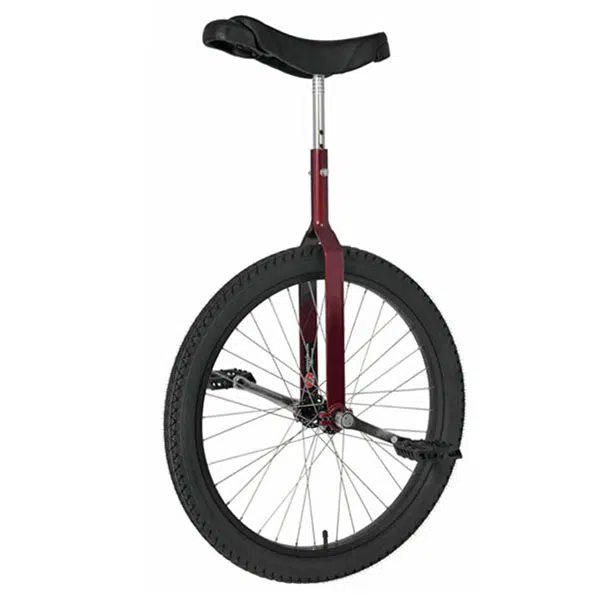
    How many people do you know that can ride a unicycle? Probably not many if any. Let me tell you why that is. It’s because learning to ride a unicycle is a true lesson in frustration. If you were to look up the word “frustration” in the dictionary, you would probably see the picture of a unicycle! You fall, you get back up. You pedal one rotation…you fall…you get back up. Two rotations, fall and get back up. Waaaaay more falling than riding, lol. You cut up your ankles, bruise your legs and get plenty of laughs and chuckles from onlookers. Most people give up trying in a day!

    But it’s those rare few that refuse to give up. Those are the Grinders. They go at it, day after day, with small improvements disguised as failures to most. Week after week they continue. Sometimes out of spite when others say ” Give up now, it’s not going to happen”. But mostly they relish beating the odds. They want to be THAT person. The one that never gave up. The one that had to conquer the frustration. The one that finds joy and inner satisfaction when going at a challenge head on. Yep y’all. That’s the “Unicycle” mentality.

  • Reason as to why something happened, or is happening, and find solutions, skills or strategies to change the situation.

    Whether it’s the beginning of the hunt, middle or the end, if you are struggling or did struggle, take a look at why. If it is a skill you’re lacking, it may take long term work . But there’s almost always a thought or reason that could turn a hunt completely around just because you were willing to consider the problem. That opens the door to possible alternative strategies, actions or thoughts that could change the outcome of your next hunt session.


  • Relish the challenge…. Take your lumps and bumps…… but keep getting back up.
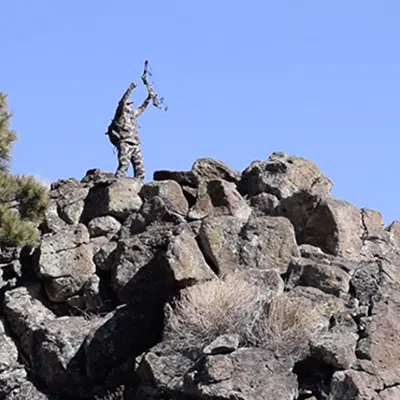
    Life is 10 percent of what happens to us and 90 percent of how we deal with it, pure and simple. We can make a hunt a lot harder on us than it actually is, simply by our attitude and how we are dealing with the situation at hand. Understand that if you are struggling, there are going to be thousands of others struggling as well. Are you going to give up, pack it in and wait another 350 days to have a shot at doing then… what you already have the chance to do now? HECK NO! No regrets in this elk camp y’all! No way! Instead of taking it hard, re-define why you are there. You wanted to be a hunter… SO HUNT! Live for it! Love it! Thrive in the challenge!
  • Make progress, not excuses…. find a way….Do what others gave up on days ago.
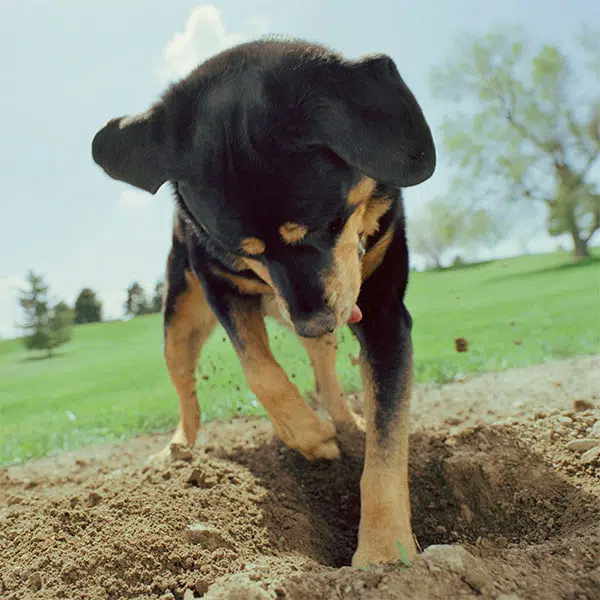
    Where there is a will, there is a way. Find it. Problem solve. Even if the problem solving is not working for 8 out of the 10 days, the least we can do is persist. If it was easy, then everyone would be filling tags. Be like a friggin dog on a bone! It’s so easy when things get hard to find an excuse because there HAS TO BE LEGITIMATE REASONS as to why it’s so difficult. Okay, so we know it’s hard, cool. Then it’s our time to find a way and make it happen. Be the one. Separate yourself from the crowd.
  • Want to change a perceived outcome. It’s all about competitive desire & ability level.

    Statistically, the odds are against you. If you hunt an area with an 8 percent success rate, then only 8 out of 100 hunters killed an elk in that unit last season. But there are two ways to look at this:

    First: These stats represent the past. Only you control your future. I truly believe that destiny is not a matter of chance, it is a matter of choice. So who’s up for rewriting the stats?
    True story… the area that I prefer to hunt had about that, an 8 percent success rate when I first started hunting it with my buddies. Because of the continual successes we, and other groups of friends have had year after year, even with the chips against us, we contributed to that area Success Rate improving to 10 to 15 percent! So, go rewrite the stats!

    Second: Do you see the glass half empty or half full. In other words, when I see that an area has a consistent 8 percent success rate, you know what I say? That means that 92 other folks are going home empty!

    Believe in your ability. Rise and live for the challenge. Know that you can increase the odds in your favor through your knowledge, skills and persistence. Then go do it!
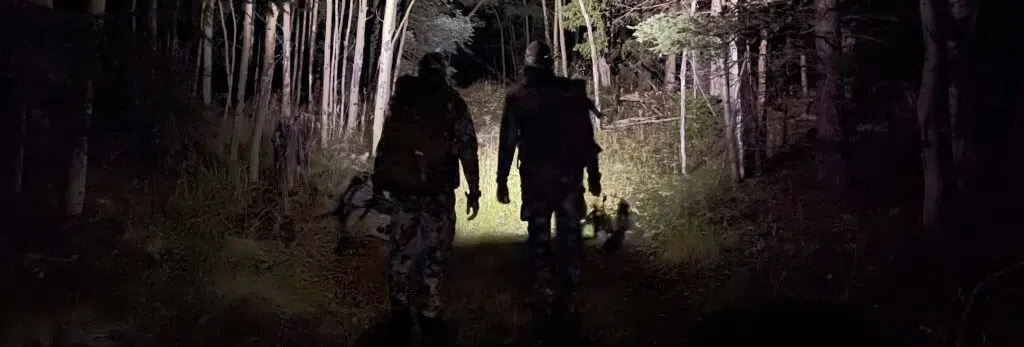
Be the Gutsy Hunter!

I want to make this clear from the beginning…

FEAR is something that EVERY human feels. It is a completely legitimate and valuable emotion meant to protect us from hurting ourselves or putting us or others into a dangerous situation. It is part of our system of self preservation. We all have fears and that is completely normal.

When fear is not beneficial is when it puts us into a state of panic or anxiety that causes us to avoid beneficial situations and miss out on positive opportunities. For anyone to overcome those types of non-beneficial fears, it takes learning, understanding, courage and bravery. It takes GUTS!
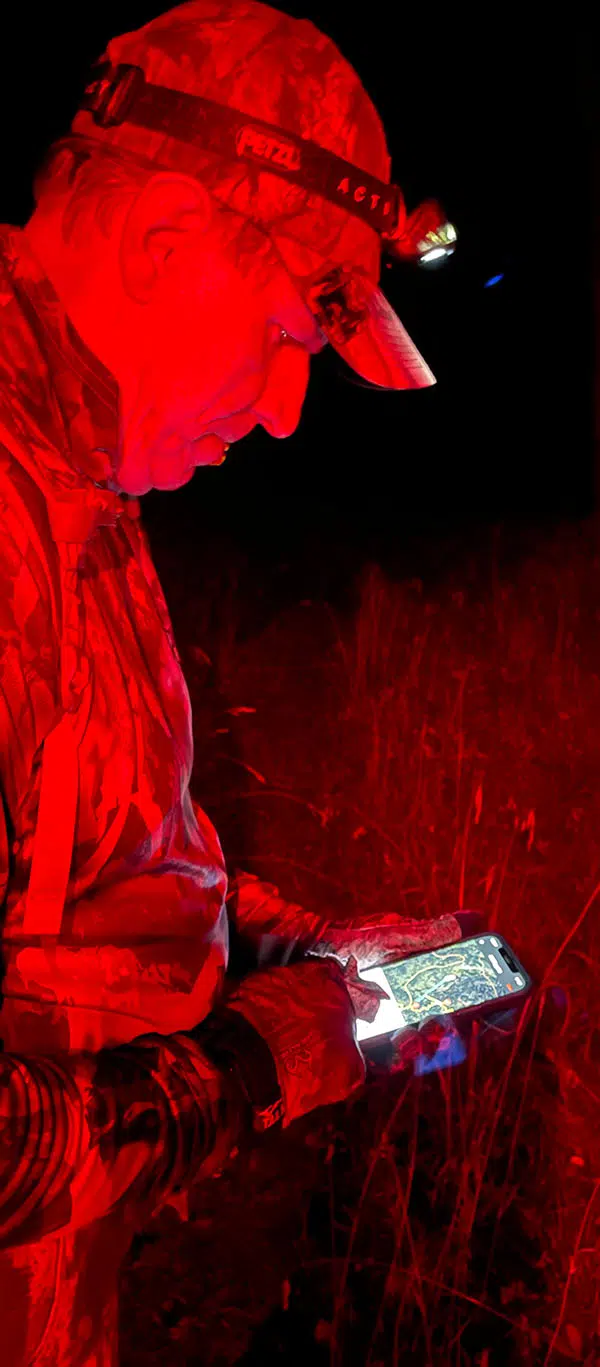
You still hear every year about hunters or hikers getting lost in the woods…it’s a legitimate fear. Especially for those that have poor woodsman-ship skills or they are not good with a map or compass. As a result, there is that little voice of worry that gets in the head. “What if I get caught in the dark?” “How hard will it be to get back?” “Probably won’t be able to get a shot anyway…. right?”

It’s that fear of getting lost, or caught somewhere unknown after dark that keeps hunters only a stones throw from roads or known trails as an insurance policy. Limiting those hunters to the highest use areas. It’s a fear that limits opportunities. It’s that SAME fear that leaves so many of us wondering, what if?

When you hunt, you are within another animal’s home court. They have every advantage over those that don’t know or understand the environment that they live in. It’s this way with anything in life. The greater discomfort you have…awareness, knowledge and understanding of any situation, business or competitive environment you enter into, the greater your disadvantage as compared to those that have worked, played or reside within that environment. That is, until you “learn the ropes”.

The same with elk hunting. Advantage… elk. Disadvantage… hunter. That is, unless the hunter has learned the ropes. You see, there is a rhythm to the woods. The sounds, the smells, wind, weather, terrain or vegetation. Within it… food, water and security for the critters that live there.

As an elk hunter, the further away you are from understanding that rhythm, the greater your disadvantage. You become a wanderer in hopes of a chance encounter. The less comfortable you are mentally, the more limited you become in needing the security of roads, trails or a warm camp. You avoid being caught out after dark or allow the fear of getting lost, or possible encounters with other predators, to limit where or how far you go. All totally natural and legitimate feelings for so many hunters. You don’t want to make a mistake that could put you in harms way. You are an outsider. Uncomfortable and uneasy with certain aspects of the environment.

But for those hunters that are as comfortable in the dark as they are in the daylight, they venture into the unknown feeling secure in the tools they carry and their abilities. Those hunters that can see, feel, hear and smell with a higher level of understanding… they go from wandering to being amongst. A purposeful participant. No longer hoping for an encounter. Instead, they use their knowledge and understanding as an advantage instead of a limitation. This is a total game changer.

With all that said, as your Coach, I am going to guide you on how you can overcome or eliminate those fears by learning how to venture into unknown areas safely, whether daylight or dark. Increasing your opportunities and putting yourself in more and better positions to kill an elk. SO HERE WE GO!
WORDS FROM The Wise
Chav's Perspective

Prior to getting a GPS, and now with GPS hunting apps like BaseMap on our cellphone, I always made it a point to head back to camp before nightfall for fear of getting lost in the dark.

Now, I hunt until night fall. That hour or half hour before nightfall is prime hunting time. Shy or smart bulls appear during this time frame and do not expect hunting pressure.

By using waypoints and tracks with new technology,  you can avoid steep canyons and difficult terrain, which you would have to navigate if using just a compass or the old GPS’s that took you on a direct (as the crow flies) route back to camp.

With added confidence, you can take your time heading to camp and cow call and bugle to locate Elk for the morning hunt.

You can get up early (before morning light) and head into the wind for the morning hunt without worrying about where you are and how you are getting back. You can concentrate on hearing Elk. Of course, make sure that you have entered camp on your device so that you can head back to camp when you need to.

The GPS & Sat Coms Changes the Game!

Technology has totally changed the game when it comes to knowing where you are, how to get back to any location, as well as, being able to get help in an emergency or just to be able to communicate with loved ones from anywhere. And that is just the the very basic benefits. What can be done on your cell phone today is remarkable and when matched with a Satellite Communication device like a Zoleo or Garmin InReach, you should never feel alone or lost ever again. But more on those in a second.

I truly believe that other than my calling ability and elk knowledge, the next biggest impact to my success as an elk hunter came with the coming of the GPS. Once I had a GPS in my pocket (as well as a good compass… a necessity), there were no longer any elk trail or elk bugle that I wasn’t going to follow. And then, when the GPS apps like Basemap and OnX came into play, with the ability to see your waypoints and tracks with so many other options on a satellite map view…WOW, what a HUGE game changer!

It opened up a whole new world and increased my elk hunting knowledge exponentially. I’m not able to truly put into words how much it increased my ability to hunt fearlessly and go places that I would never have gone. Especially two hours before daylight or two miles from my ATV with the sun going down. Add a satellite communication device to the equation and you give both yourself and your family an important peace of mind that can remove a lot of stress from the equation. 

TIPS FOR USING SATELLITE COMMUNICATION DEVICE
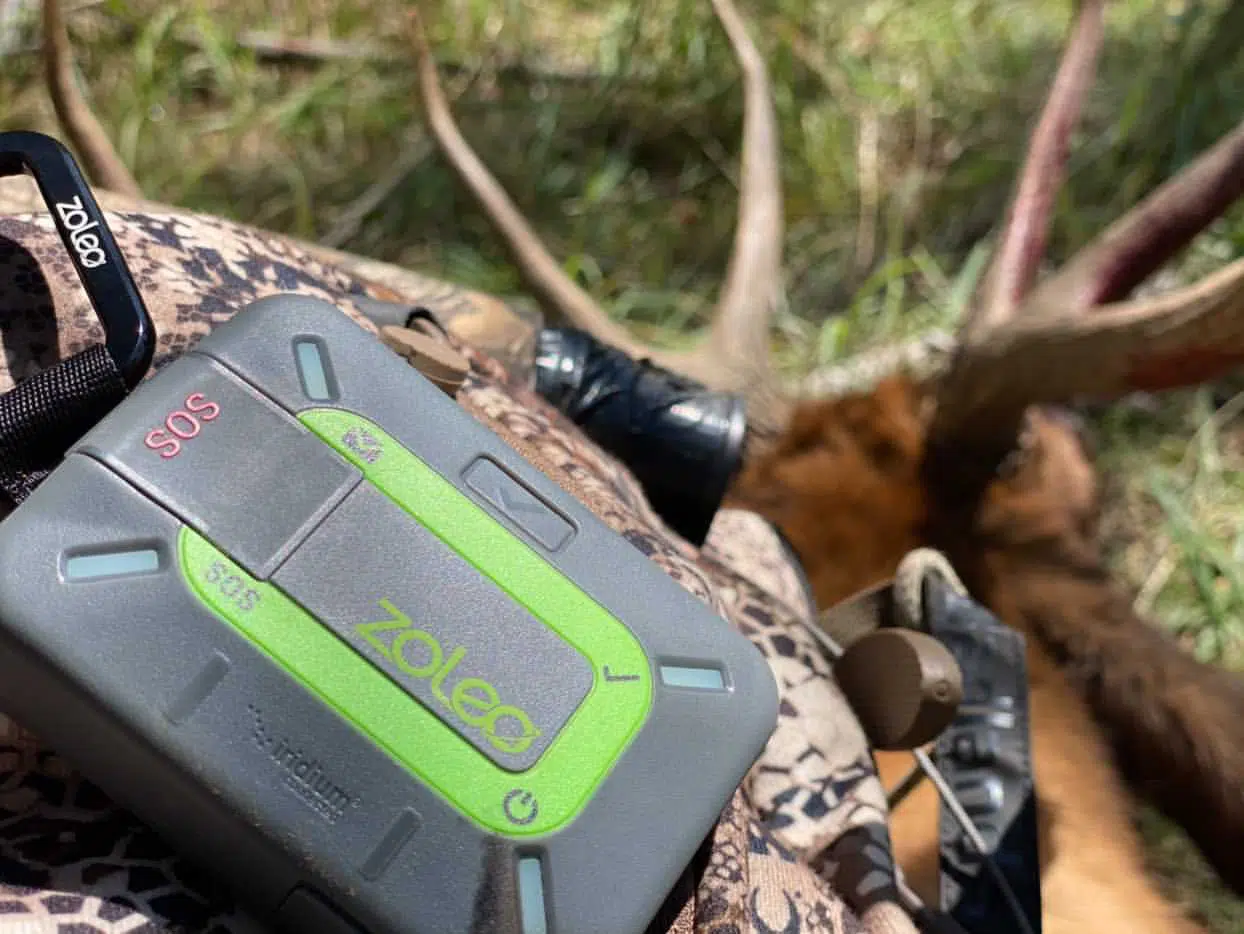
There are multiple choices out there for Sat devices, but our crew currently prefers the Zoleo. It costs less, has a great plan that you can upgrade, downgrade, suspend or cancel at pretty much any time. I say “any” because you have to use your subscription plan for 90 days before you can cancel or suspend it without a penalty. But you can upgrade/downgrade plans any time. We have used Zoleo devices now for 2 years in freezing cold, snow, rain, heat and in every environment you can hunt and it has performed flawlessly.

Besides using it to communicate home to loved ones and the SOS feature, we use ours to communicate with each other while in the field. Most places we hunt have limited or no cell service, so this has been priceless. Not only for safety purposes, but we can communicate during the hunt on where we are, where we are headed, what we have seen and coordinate game plans to help each other.  We have tried quality walkie-talkies in the past, but in mountainous country, there are no guarantees with them if you don’t have line of sight. We haven’t used “walkies” in years.

The Sat device is also invaluable when we get an animal down and need to call in the calvary to help pack out. For you, especially if you are solo, if you have contacted a friend, family member, packer or an outfitter ahead of time to help get you animal of the mountain, it allows you to message them from anywhere. You can give coordinates and directions to make the process a lot safer and quicker, minimizing room for error. 

TIPS FOR USING GPS

***NOTE** – Always carry a small compass in your pocket. Not only for backup, but once you get a response from an elk or identify a direction to a waypoint like your camp, mode of transportation or any desired location ,  you can continually verify direction and save time and your phone battery

Before the hunt

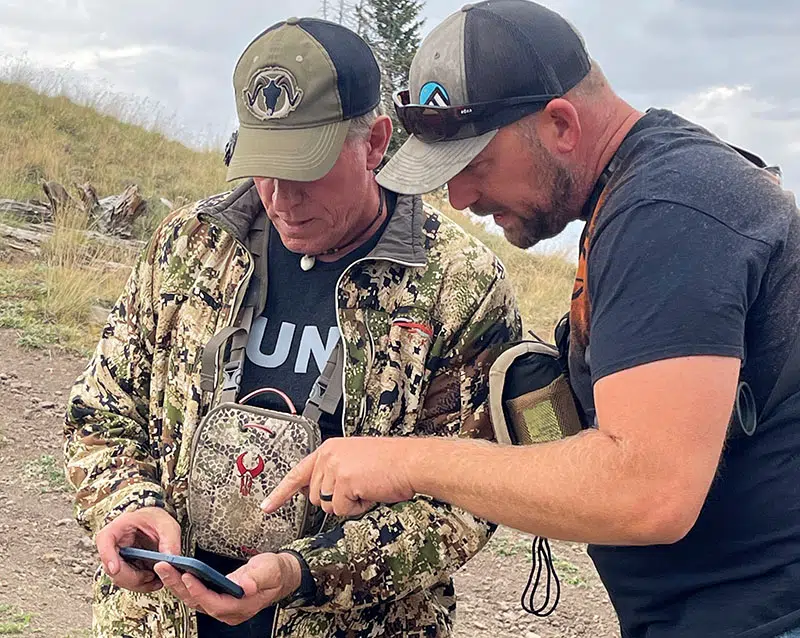
  • Offline Detailed Imagery – Your phone GPS application will allow you to download offline detailed satellite maps that will allow you to have an incredible view of the country you are in without the need for phone data or service. This will allow you to add waypoints (location markers with labels) for destinations, proposed campsites, possible parking spots, water sources, glassing points, possible bedrooms, visible trails and roads before you ever hit the hills and have them at your finger tips.
  • Digital Scouting – Mark destinations (possible camps, glassing points, etc.), Road and Trail systems not marked, Water features, Hidden parks, Possible Bedrooms on Benches, Funnels and Saddles. The main online scouting tools like BaseMap or OnX have both desktop and phone apps. Whatever you add to the Desktop version while e-scouting, will be synchronized to your phone app as well. Be sure to open your phone app while in your service area before hitting the woods to make sure your waypoints and other info have been synced.
During the Hunt –

  • Your GPS App has satellite map visuals that are perfect for getting in position in the morning darkness or out at night.
  • Mark camp, ATV or Rendezvous spot
  • Mark located elk sign – (Color code to identify old and fresh. Both together will show a pattern) Wallows, Rubs, Droppings or Urine, Bedding areas.
  • Use the track feature to:
    • Track your hunt route and area covered, which in turn gives you a route back to follow if need be.
    • Mark elk trails you walk, unmarked two tracks or ATV trails used. (Stop & Start new tracks and color code them for visual recognition)
    • Favorite routes taken into hunt areas.
    • Best routes taken to retrieve game and pack back out or for partners to follow.
    • Grid an area after a hit and loss of blood. Incredible tool to help find downed game!
  • Use the “GoTo” feature to find quickest routes to a waypoint or location.
  • Use navigation features to tell direction & distance to any location, feature or landmark.

Woodsmanship - No Batteries Needed

It’s absolutely true that the GPS and a SAT device are game changers in the mountains. Incredible, incredible, INCREDIBLE tools that help in so so many ways. But it is critical to the TRUE overcoming of fears, and that gut level of comfort in the mountains, for you to use them to grow your woodsman-ship skill sets and not become emotionally, mentally and solely dependent on them.

I DO NOT want you to be that person in a lake wearing a life preserver to stay afloat. Having that limited sense of security as you grasp the vest and merely kick your feet to move around the lake. Afraid that if you let go, you are sure to drown. I would rather you know you have a life vest, JUST IN CASE, and be one with the water. Free to swim and dive and explore the beauty and the depths of the water around you. 

So how do you get to that level of comfort?

Learn how to understand, use and take advantage of a phone GPS applications like BaseMap, OnX, FatMap, etc. How to use them in conjunction with a compass. But at the same time, don’t let them blind your vision to the lay of the land and landmarks as your tool for finding your way. Learn to look as much behind you as you do forward. That way you know what a trail or area looks like when coming back through it. Be an active observer, a participant and not a passenger.

If you want to be a basketball player, you go to the basketball court. If you want to be comfortable outdoors, then go to the woods! It doesn’t matter if your woods are in Arkansas, New Mexico or Peru. Go into them…EVERY chance you get! However, you need to go with a different purpose. To be an observer, a learner, a participant. To be amongst.

In other words, see, hear, smell differently than ever before. Learn the ways of the wind. The movement of the sun. The pattern of the stars that can show you the way. Understand the conditions and what it takes to be comfortable in them. The signs of life. Where animals travel, where they feed, where they water, how they live.

Seek out whatever critters live in those woods. Spend time amongst them, observing, learning and becoming comfortable within the time and place.

Go into the woods before daylight. Come out after dark. Learn to sit in the woods before daylight and after dark and find comfort in the sounds and flow around you without letting your imagination create monsters under the bed. The only difference between the day and the night is the color. The same animals are there with their very same fears of humans. The logs and branches do not grow arms to grab you. You are prepared! You’ve got this.

And no matter what, remember this: The greatest asset to anyone moving through the woods at night is being calm and deliberate. Again, do not create monsters under the bed. Understand that you and your decisions control your situation and all outcomes. Stay in control of your mental and physical efficiency. Knowing when to go and blow… when to recover and reserve… eat, sleep, drink and when to slow yourself down and stay calm. These things are so important to self preservation and being comfortable in the outdoors. Even more so in the veiled solitude of the darkness.

Heads right! I'm Here! Now what?

As I discussed earlier, there are going to be three critical times in your annual elk hunting journey that you will be asking yourself that one question in relation to finding elk. “Where do I start?”

The first time you ask that question, unless you have a traditional spot or other reasons that make the decision for you, will be 1) The Planning Stage: During the hunt application process or when deciding on which OTC or Draw unit . Then the 2) Scouting Stage: before the actual hunt when you are deciding on focus areas or working out a game plan. And finally the 3)Hunt Stage: you’re at camp, or at the point of entry for your hunt with boots on the ground.
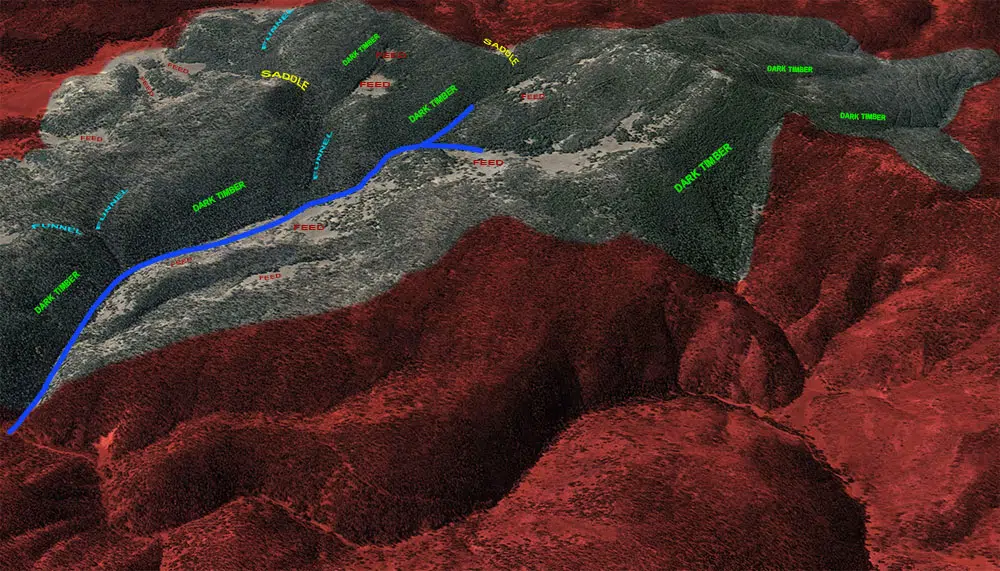
However, when it comes to the first two stages, how can you make decisions to find something, unless you know what you’re looking for? That’s like having a one thousand piece puzzle and no photo to look at when trying to put it together. It just looks like one thousand pieces. Overwhelming.

But once you can see the final outcome, it lets you eliminate some 900 plus other pieces. Then you can focus and become way more purposeful and efficient in the locating processes .

So, in staying true to my coaching style, we will start with the last of the three; The HUNT STAGE: Boots on the ground and ready to hunt.

So let’s get started, we’re burning daylight!
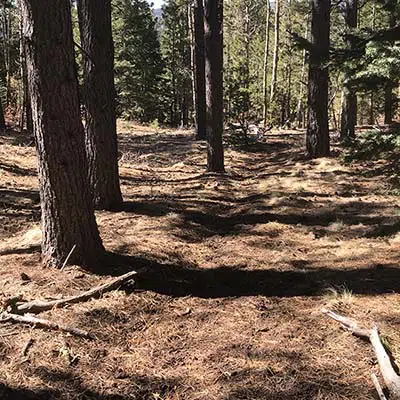
HUNTING STAGE

During the Hunting Stage, once you get boots on the ground and stop to look around at the mountains, or hills or the forest around you, that will be the first time that you truly realize that you have left an environment that you know and understand, to now becoming a speck in the middle of nowhere. But if you just consider what I am about to tell you. You actually know more than you think. You already have more of a grasp of the situation than you know. You just have to learn to trust your own instincts.

A Little Dose of Perspective

First off, I going to help you have a grasp of the situation by giving you one of many examples of how to put your instincts into perspective. How to see things a little clearer as we move forward. Let’s start where we are all the most comfortable…OUR home!

Think about what makes you comfortable at home. There is familiarity. There is structure. And there is security in that structure. We know where to go for our food, our water. We know where to find our family and friends. If we come home after work and we expect a family member to be home, we know to call out. If there is no response, we look around for signs to verify if someone is home or not. Are there open snacks on the table? Car keys on the counter? Do we hear water running in the bathroom? Is the TV on? If you know someone is home and you still haven’t found them, what do you do?  You call out. But this time, just a little louder and longer.

What is the reason for this little exercise?

So that you understand that as humans, we have our habits and we recognize the tell tale signs of other humans as well as the emotions and ways that we communicate. Likewise, I want you to understand that the those very same concepts work for locating elk. Elk live pretty much just like you! They need the same things…Water, food, security, comfort and socialization.  They need someplace cool if it’s too hot. They want to lay in the sun if it’s too cold. But at the right time of year, their desire to breed can override their more intelligent decisions. Y’all, in a lot of ways we are just like elk. To over-simplify, basically we are all herd animals. Your weaknesses are their weaknesses.

Let’s take it a step further!

What if you were somewhere totally unknown and you wanted to locate other humans. Where would you go? Why would you go there? What would be the signs of life?

Let’s say you have a camp, in a place you have never been before….never. Besides calling out, how would you go about finding people out there in the woods? You would follow trails. Especially trails with fresh boot or shoe prints. You would look for campsites. The smells of something cooking or fire smoke. You would try to see lights or fires at night. You would listen for laughter, talking or other noises made by humans.

Just let that sink in. Because once you snap to what I am saying, your whole ability to locate elk will change with this very basic concept. Our roads, the routes we take from home to work. The paths we take daily for exercise, socialization or our basic needs…they are all no different than elk trails.

How often do we go to a sink, or the tap? Just like elk have to water at ponds, creeks and springs. Where do we grow our gardens? Mostly where there is good fertile soil, moisture and sunlight right? Elk use the same criteria for the best grasses.

Just as you can walk into any home and recognize how “lived in” that home is,  it’s the same for elk. It’s all there to let you know where they were, or where they are; smells, sounds, tracks, droppings, urine, beds, wallows, rubs, blown up trees and chewed grass, trees or plants.

So, now that you have those concepts in your head, let’s step back and begin to tackle that one HUGE question, “Where do I start?”.

Well y’all, first you locate!

First, You Locate

There are so many variables, reasons or decisions that may lead you to your hunt location. But no matter how you got there, you are in the same boat as every other hunter in the woods. You are trying to figure out where to start and answer that one most important question…”where the heck are the elk?”.

When breaking this down , you are first locating the areas where you know elk are or that the elk are using on a consistent and probable basis. How do you know? It could be because you or someone you know has either seen them from a distance or heard them from near or far. When it comes to certainty, if you see or hear them, you have definitely “located” them. Those are what we call “Location Layups” and why being able to call to get a response can be huge in locating and then “finding” elk (or better yet, having them find you!). 

But what if it’s not a layup?  What if you are not seeing or hearing elk? Look y’all, If you want to be consistently successful hunting elk, there is no way you rely on only one strategy or hunting style. This is when your elk “location” skill set and your hunting skills are truly put to the test. Now it becomes about smelling them or finding fresh sign; fresh beds, urine, droppings, rubs or blown up trees. Muddied-up wallows or tons of fresh tracks and trails. It’s about understanding the behaviors at that time of year. How they move and where they want to be. It’s about understanding the signs of life in their house.

All of this is critically important when hunting elk in the early season or anytime when the elk have gone silent. Because if you can kill a silent elk, you can kill any elk!

So let’s start locating elk. First, let’s change your awareness!

WANT TO LOCATE ELK? Change Your Awareness

In your and my world today, we live in a society where we work more at ignoring, rather than dealing with all the huge amounts of stimulus around us. There is no way we could deal with all of the sights, sounds and smells that are constantly changing and demanding new attention from us second to second. It’s just too much. So we basically shut ourselves off to it all and blur our senses. We dull our awareness.

We look without seeing, without comprehension or understanding. We hear without listening. The sounds around us becoming a drone of background noise that we ignore. And our smell, well that’s the hardest to ignore if it ties us to past experiences that we like or dislike. In fact smell is quick to jog an old memory. But we are quick to bypass smells that we don’t relate to or that we don’t like. We actually train ourselves to dull our awareness of all our senses.

That’s why so many hunters have difficulty finding elk. Mostly, because many of us are not sure what we are looking, smelling or listening for, but also because we have trained ourselves not too.  If you want to be a successful elk hunter, changing and training your awareness is huge.

Here’s an example of what I mean. I’m  going to oversimplify, but you will get the point and hopefully begin your awareness training as well.

EXAMPLE 1 – Standing in a park, meadow or clearing of any kind. What do most people see, think, do or sense?

  • They look up and around and take in the area.
  • It’s a pretty place.
  • So quiet.
  • No animals in sight.
  • There is water running.
  • The grass is tall and green.
  • Good breeze
  • It’s surrounded by trees and mountains.
  • The sun feels good.
  • They think about the next destination.
  • Look for a possible trail.
  • Wonder how far they are from their camp.
  • Try to figure how far they can go before they have to turn back

All pretty normal. But next, in “Example 2”, I’m going to give you a sense of how that same location is experienced by an aware and knowledgeable elk hunter.

EXAMPLE 2 – Standing in a park, meadow or clearing of any kind. What does a knowledgeable and aware elk hunter see, think, do or sense?

  • What do you smell? Are there lingering remnants of musty licorice elk smell?
  • Is there a main elk or deer trail evident and going through the meadow? Just a highway and not a stop?
  • Are those birds chirping or a cow elk?
  • Tracks? Droppings? Urine?
  • Is the grass chewed ?
  • Are there elk beds in the grassy areas? Smell the beds…
  • Does the overall area smell like elk or just faintly in the beds?
  • Is there a water source in or nearby?
  • Is the water source muddied up or clear and undisturbed?
  • Are there tracks in the dirt or mud at the water source?
  • Are there any blown up elk raked trees? Are they fresh or old?
  • What about antler scrapes in the dirt?
  • Urine Wallows? Water Wallows?
  • If it’s early in the morning with dew on the tall grass, are there dew trails?
  • Is there a fence line near to check for elk hair, a fence line trail with tracks along it… bent or missing fence strands?
  • Stand in the middle of the meadow and turn in a circle looking above the meadow. Are there any dips, funnels or saddles in the terrain?
  • Can you see dark timber in the distance?
  • Any breaks in the canopy or terrain on the surrounding hills from recent fires, sparse timber or different vegetation?
  • Is there a trail coming into the meadow that is in, near or below that terrain feature?
  • Go 5 to ten yards into the edge of the meadow…circle the meadow…any trails coming in?
  • Go onto any finger ridges leading into the meadow. Are there trails there?
  • What direction do these trails go and why?
  • Are the trails deep or shallow?
  • Are they churned or smooth?

Awareness is not viewing like a passenger on a tour as you are walking or taking in an area. It’s about you taking an active role and SEEING, SMELLING, HEARING, INVESTIGATING AND UNDERSTANDING the past or present activity, as well as the features that elk like and how that area relates to those features and their current behaviors.

Probably the biggest lesson from the exercise above is that you realize that there is so much you don’t know to look for, because there is so much that you don’t know about elk. Absolutely and totally true for you and most of the rest of the world! But what I want you to understand is that by becoming more aware to your senses, you will notice things that begin to become parts of a puzzle. When you really see, hear and smell, you become an observer. You begin to question the reasons behind what you are digesting and will discover things that become clues and “aha” moments. You are a participant in the environment and not a passenger. Not only will your increased awareness help you in finding and understanding elk, but it will directly improve your woodsman-ship skill set as well.

Now, it would be pretty cruel of me to leave all of those above tidbits of elk behavioral insight left hanging up there in the above example without any explanations to help you learn. So I am going to begin training your awareness journey by giving you some sensory connections and some behavioral insight. I’ll try to categorize them according to the senses used.

Sight...

Elk Trails Elk, like humans or other animals, like to use the most efficient paths of least resistance whenever possible. I will talk more below about some of the places to look for their trails, so let’s focus first on what to take in about the trails themselves. The wider and more worn the trail, you know this trail is used very often. It is a main highway into a destination or across or into a feature. Sure, lots of animals, both wild and possibly domestic, will be using this trail due to ease, but the tracks in it will give you the elk story. Sometimes due to the terrain around a trail, it may be terrain forced to stay narrow. But if it is well used, it will become deeper. Some by erosion, but also by use. You can often tell the difference. If you find a wider trail that has depth, it is a major trail. And most likely had cattle on it as well. But when you find those green grassy areas that have a trail though it pounded with elk tracks like someone used a Rotor Tiller… yeaaaahhhh buddy!

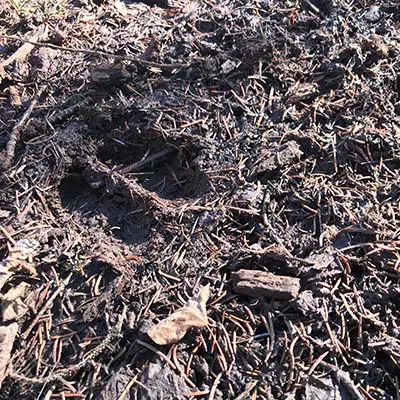
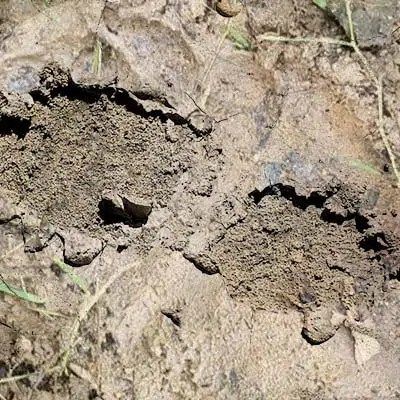
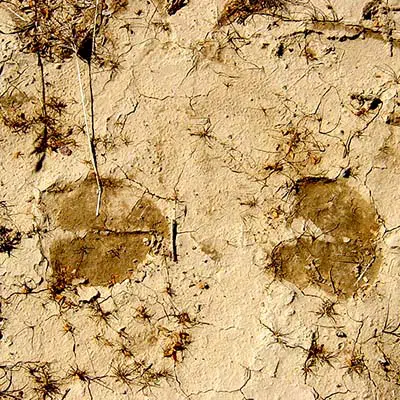
Elk Tracks – Elk tracks come in various sizes with the smallest being from a calf, then cow or young bull being about the same, with the largest being a mature bull. As just an idea of comparison between the size of a cow elk track and a bull elk track, take your hand and open it flat, palm up. The size of your fingers area, all together, would be considered the cow elk track size. The size of your palm area would be the size of the Bull Elk. Now, this is all relative to the size of folks hands, but it gives you a general idea of comparison.

There is an absolute difference between deer and elk tracks, with an elk track being wider, longer and thicker…so that shouldn’t be an issue. I would say that the one track that could most often be mistaken for an elk track to the untrained eye, is the track of a young cattle calf. But the surrounding tracks with the calf should be the biggest clue. Cattle tracks are as wide as they are long and fairly easy to identify. Once you see your first elk track, you will have it down.

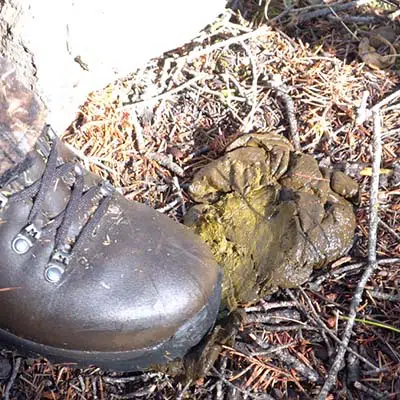
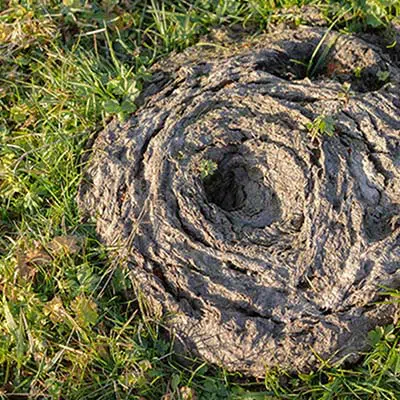
Elk Droppings – Generally, fresh elk droppings are a light green color and when smooshed with the foot, especially with wet conditions where the elk are getting good moisture, will have the consistency of acrylic paint out of a tube. It’s solid but creamy and easy to smash with your shoe. I say generally, because in a very dry year, they will still be light green, but more firm and shaped like large deer droppings. During wet seasons, the elk droppings are flatter and more “ploppy”.

Fresh droppings are light green in color and if the outside is very soft and the same as the inside when smooshed, you have elk most likely from very close to a half mile or so. If they are steaming… you are amongst them! As the air hits them, they will turn darker brownish on the outside. The darker the outside is from the inside, the older.

Chewed grass – Elk feed on a lot of grasses, browse and woody stemmed plants, depending on time of year and availability. But they are grazers first and chewed grass is the easiest to notice. However, if there are cattle in an area, this could be a wash. Elk also do not eat themselves out of house and home. So if an area is “chewed down” without new growth coming up, the elk will move and rotate through different areas. By knowing and marking these areas, you may just get a good feed map of possibilities.

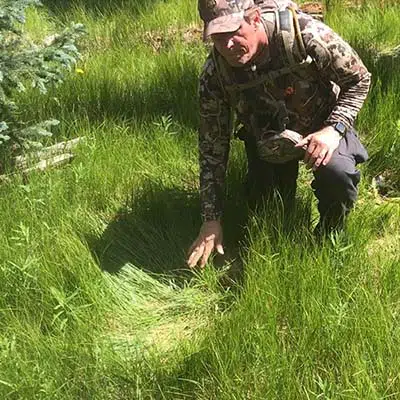
ElkBeds – You will find that elk bed down in two areas; their “daybeds” and their “night beds”. An elk’s night bed will be in the parks and meadows that they feed in at night. They are positioned away from the timber and with thermals coming down so they get protection by being able to both see and smell approaching danger. Night beds are very evident in pressed grass, especially in taller grasses. The grass in older beds will become dry or even yellow. It’s a sign that elk have been there, but it’s been a while.

Their daybeds are in timbered areas that provide them thermal regulation and security both visually and with their nose using the rising thermals. But don’t forget, thermal regulation is all about the sun and temperatures. In hot weather, they are going to be in the deep dark timber where it’s cooler. In freezing temps and snow, they are going to be in more open southern or western slopes where they get warmth from the sun. Thermal regulation is one of the most overlooked aspects of finding elk. Everyone always hears north, northeast slopes. Well y’all, in a heavy snow storm, they my be there for protection from the wind and snow. But otherwise, when temps are freezing, those open benches, tops of ridges or south southwest slopes become the ticket.

Daybeds are most often found on benches or in areas between 5 to 20 degrees in slope. They are usually in dirt in the dark timber and you can usually get an idea of how fresh the sign is if there is wet elk urine. Elk will generally relieve themselves when they first stand from their bed. If the bed has an elk urine smell and no wet spot, that bed was used days ago. If there is no urine smell at all in the area, over a week easy. If there is a wet patch in the dirt or grass, that tells you otherwise. That’s fresh sign. You can also possibly get an idea of whether it’s a cow, calf or bull by the size of the bed, but also because a cow’s urine will fall on the perimeter of the bed, while a bull, just because of anatomy, will urinate more in the middle of the bed.

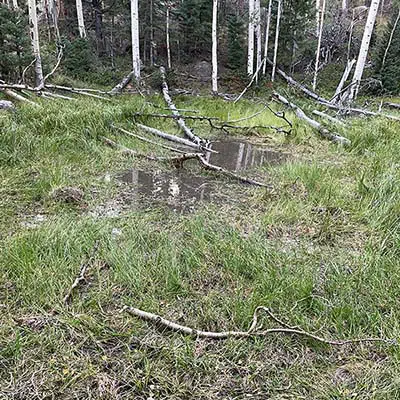
Water source – These could be natural springs, marshes, creeks, rivers, lakes, ponds or man made dirt ponds. Wallows are just areas in or on the sides of a water source that a bull will roll in and develop a cool mud bath. You not only want to take visual note of water sources, but they offer a great way to check for fresh tracks in the mud around them. I don’t go crazy about water sources themselves so much. I am more interested in whether they are close in proximity to other elk features or attractions. When I find bedding areas, feed, water, natural funnels or saddles within a half mile or so, it has my attention. I also am more interested in water sources that meander and spread to create a quality feed area. Now if there is a wallow, or string of wallows fairly hidden and near a known bedding area, that raises it up on my possibility and focus scale. But when it comes to open water sources, I know that pressured elk will drink at night and can go miles to other water sources.

Human Tracks – It’s not like you should see a human track and vacate the area. Not at all. But it helps to let you know if a certain area is getting pressure. If you are consistently seeing tracks from other hunters, then take note of the trail and the directions they are coming from and going. You might be able to then develop a different game plan that uses their activity to possibly pressure elk to you from a different access point, or in deciphering nearby areas or holes that elk might be using due to the current pressure.

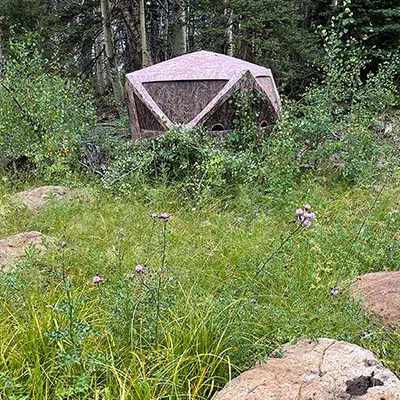
Hunting Blind, Game Cams – Believe it or not, these are both good and bad. Bad, because it’s an area that someone is working and could get crowded. So I would most likely move on. But it’s also good because a blind or camera signifies that the area is attracting hunters because of known activity or because of the elk features that they are setting up on. Most of the time, those features are going to be in a destination area. A feed area, water source or a highway of a trail between destinations. So by understanding the attraction, you can also recognize the possible bedrooms, travel routes, corridors or funnels leading to the attraction from nearby locations. Those are the areas you would hunt. Those are the areas where the elk will be active for a much longer amount of time.

Cattle Tracks – It’s important to recognize the difference between a cattle trail and an elk trail when determining activity. Also, a large enough herd of cattle in an area can mean competition for feed. Where elk won’t eat themselves out of an area, cattle can chew grass down to short carpet level. But if there is a small group of cattle in an area, other than the possibility of them spooking elk when they run thinking you are after them, the elk can easily coexist.

Cattle Droppings   Another sign of the amount of use by cattle in the area. But again, depending on the number of cattle, take note of the areas that they are feeding. They, like the elk, are looking for good feed and if the cattle numbers are low, those feed areas, or areas nearby, could also be attractive to the elk. Just something to keep in mind.

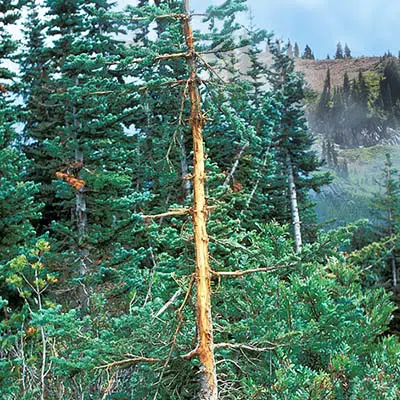
Blown up trees – I consider blown up trees and rubs to be two different things. A “rub”, is generally on a taller young pine that a bull can work up and down with his antlers. There are early season rubs, where they use the tree to rub off velvet, and those transition rubs where they are leaving their scent on the tree as well as strengthening and working off some of that rising level of testosterone. But those “Blown-up” trees are those smaller jack pines, juniper trees and scrub oak that become the instant object of aggressive demonstration when trying to show dominance to cows or another bull.  Rubs, generally happen on the sides of ridges, in transition corridors, near bedding areas or in thicker cover. While the blown-up trees are often, but not always, on the edges of their night beds. Those parks and meadows where bulls are screaming and demonstrating as a visual for either the ladies or other bulls.   

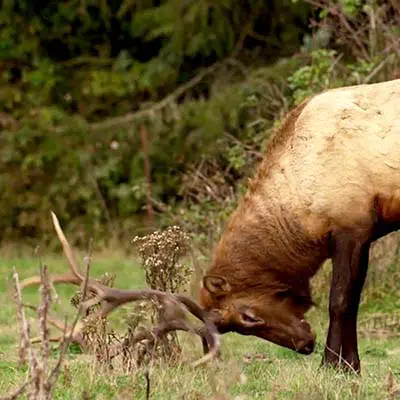
Antler Scrapes – So what do you do if you are all worked up with no jack pine nearby? You take your aggression out on the ground! You will find areas where bulls have scraped to the dirt with long stroked gouges and dig marks. Just another way of demonstrating. Sometimes a bull will even work an area with tall grass, moss, mud or whatever and toss it up into the air or onto their antlers or back on their head and body. All a big show of dominance and a way to let some steam off.  These scrapes can happen anywhere. It’s not a place a bull will revisit for any reason. But it does show that there are bulls in the area and they are definitely feeling rutty.

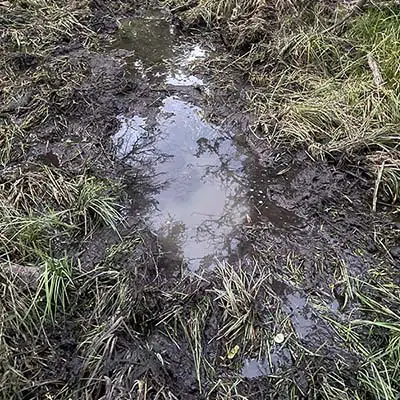
Water & Urine Wallows – When you hear the word “Wallow”, you visualize a dog or a pig rolling in the mud. It’s the same thing. An elk will use the edge or shallow area of a water source to dig, stir up mud and roll in it. They do it to cool off, mud up to help with bugs and to demonstrate and leave their scent calling card to other bulls in the area. Much like how dogs pee on the same bush as a message to other dogs. You can often tell when a wallow is being “hit” by the water being muddy and not clear from having had time to settle. You will also find fresh mud spattered on nearby grass or rocks.

But in dry years, I have seen bulls create urine or “piss” wallows. They continually work the dirt with their antlers and pee in the loose dirt and roll in it. When you find one of these, you will definitely know it. The visual scrape and the smell definitely tells the story.  Of the two, I think the water wallows, especially those that are more hidden in transition areas or near bedding areas are the better of the two to have on your radar. The water wallow not only provides all the wallowing fun and aggression release, but they also are a source of water. Two check marks on the plus side.

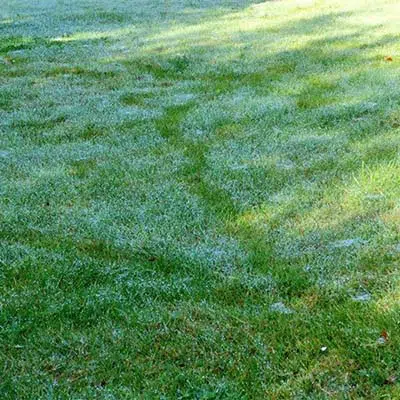
Dew Trails – It’s not very often you see these, but when you do, it’s so cool. It takes tall grass in a meadow, morning dew and the sunlight shining just right and you can actually see where tall animal has gone through and knocked the moisture from the disturbed grass leaving a very visible trail of where they cam from and where they are going. The width will tell you if it’s a deer or an elk and further investigation will most likely show track. If it’s early season and you see one to three trails.. most likely some bulls moving through. Lots of trails and of course you have a herd. Also, because this is fresh morning dew, you know that the critters are not that far away.

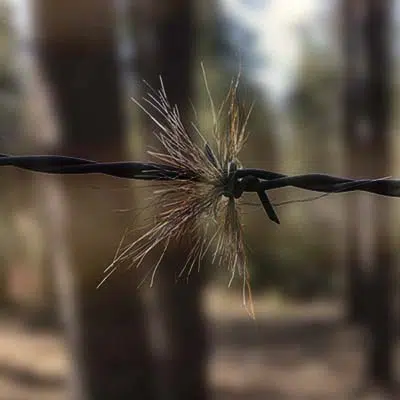
Fence Line Evidence – Fence lines are one of my favorite places for gathering info. Finding bent or broken gaps in the fence, hair in the barbs of the bent wire or fresh track and locations where the elk like to cross from one area to another. Those crossing locations will generally show you area funnels or well traveled corridors. Train yourself to not only see what’s in the immediate area once you find those crossings, but look beyond for destination features that they may be using as night or day beds, possible water attractions or feed areas. Those destinations are important to note, but really, it’s the travel corridors between destinations that you find are most used… those locations are golden. Those are the areas that you will be able to create encounters way before the elk get to parks, feed or the water. Especially if the area has travel browse or strings of small hidden clearings leading to a favorite destination.

Surrounding Terrain Pathways – Much like we just talked about above in the Fence Line Evidence, each of these are natural “FUNNELS”. “Dips” that could be wide or narrow, smooth or more drastic with steep sides. Dips come in all shapes and sizes but are drainage type of areas where water would most likely gather or run but they become a natural funnel or pathway in forested areas or out in parks or flatlands. They generally would hide animals from sight or be barely visible.
“Saddles” are generally a low gap between two rises that cross over ridges and create a natural and easy path from one side of a ridge or area to another. the steeper the rises on each side, the better the funnel. Most often you will find a prominent trail or two crossing the saddle as evidence of use.
When I talk about “Edge paths”, I am referring to paths created by elk just inside the timber or the cover surrounding a meadow, clearing or park (all pretty much words for the same thing). They are usually no more than 10 feet to ten yards inside the edge. Elk will use these to stay in cover to not expose themselves or before venturing into the open.

Dark Timber – Elk need food, water and security. Thick dark timber provides that needed cover and security, but it also helps with another huge need… thermal regulation. During those warm days of September, the temps in these thick shaded stands of timber will be 10 to 15 degrees cooler than in the open areas and become the daytime bedrooms for elk.
But are all timber stands built equal? Not really. Elk like to bed down on slopes between 5 to 20 degrees. So look for “Benches” or areas that flatten within timbered areas or at least fit in the 5 to 20 degree aspect. And just as a string of openings or small meadows are a great spot to find elk in the mornings or evenings, a string of benches or steps of benches in an area of dark timber are an immediate focus for elk hunters.
I also look for dark timber stands that are natural funnels first, then in proximity second to feed areas or water. Locations where elk can bed and then transition within a half mile, or mile depending on variables, to feed or water. Anytime you can locate groups of elk features in one area… dark timbered benches, good graze, seeps, springs or creeks, easy transition to and from each through natural funnels, trails or saddles… then you have all the elements for marking that as an area of interest.

Canopy Breaks – Remember that elk are primarily grazers. And good grass requires good sunlight. That’s why breaks in the forest canopy or areas that open up sunlight to the ground to create growth become elk magnets. This can be the result of beetle kill, timber cutting or thinning, recent or even older fires, natural vegetation or trees that allow more light… like aspen groves, or even manmade areas of agriculture. Depending on the soil types, moisture and other variables, some of these areas will be more nutritious than others. For example, clearings as a result of a good wildfire can produce nutrient rich grass and forbs that become elk magnets. Timber cuts, after time for rotting of left over branches, wood and leaves, can become an elk’s favorite area. Especially when timber is left standing that allows some cover while also having good grass. 

.

Sounds...

Bugles – It was hard for me to even list this, with it being the main focus of almost all elk hunters when it comes to locating elk. The Bull’s bugle is one of the most magnificent things you will ever hear. The sound that haunts every elk hunters dreams and what we live for. However, when you do hear that bugle, you need to think about and observe some things; Is it early in the day with them going up or away to a destination or late afternoon with them coming from their daytime beds and heading to another destination? Are the calls coming from one location or on the move? Is it a lazy bed bugle, a moving advertising bugle or a constant short demonstration bugle signifying cows are with the bull? Look in the direction of the call… is there north facing heavy timber near there? A saddle from one side to the other? Do you see any funneling features? Can you see any feed or water features? Mark all of this mentally and then check your GPS app and associate what you are seeing with what is shown on the map. From there you now have critical information that you can use to develop a game plan as well as to help you see the types of features that the elk in the area are using. 

Are Those Birds Chirping? – I can’t tell you how many times I have had new hunters disregard cow elk chirps thinking it was a flock of birds instead. They literally zoned it out with all the other forest noises until I pointed it out. I would get the “Really?” look on their face and then I would see the light bulb come on and the excitement come over them. 
It’s important to note that this happens with other elk noises as well. Bulls raking trees, glunking,  low grunts , whines and sparring antlers noises. All of these sounds can be low audible and easy to miss. Especially when you have your expectations set only for a bugle.

Squirrels Barking – The tattle-tails of the woods. When they are barking there is a reason. And you can hear the emotion in their voice when the are letting you or any other critter know that they don’t want you in their territory. I have had squirrels lead me to both deer and elk or let me know of the presence of something else in the woods many, many times. 

They also can be a big pain when they start dropping cones and making you think you hear something coming!  

Everything is Silent – It’s just as important to note what you are NOT seeing or hearing as it is what you are. When everything has gone dead as a graveyard in the area of the woods you are in… no birds chirping, no squirrels barking, no elk sounds or any other animal movements, there is a reason for it and time to move on. The woods around it has a flow. When everything is all good, you can see and hear it. The same goes for when it’s not all good. 

.

Smells...

Reverse the Tables! – Elk have a definite and very unique odor that you can smell from a pretty good distance, depending on time of year and the number of animals. Prior to the rut, the smell is a more of a clean light licorice type smell. But as the rut happens and the bulls start wallowing and urinating on themselves, the smell becomes stronger and more musky. The smell is very similar to a bovine cow, but sweeter smelling in the way that one flower can smell more pleasing than another. My wife thinks I’m weird, but I actually like the smell. 
My very first strategy for hunting elk was to work crosswind in an area that I knew they were using until I caught their scent. From there I would just work into the wind sniffing them out. Let me tell you this from experience, if you are walking and suddenly catch a really strong smell of elk, STOP! Look around very carefully. You are either where they just were and have urine close or you have elk within 150 yards.

So even though you have to constantly check the wind to make sure that an elk doesn’t smell you, you can absolutely reverse the tables and use their smell to locate them!

Elk Urine – An elk’s urine smells pretty much like the elk themselves. One you smell one or the other, you won’t have a hard time recognizing it. Their urine is very distinctive. But where a bull elk’s body odor will become stronger and more musky once mixed with their urine and the smell of the dirt and mud they are wallowing in, I personally can’t tell the difference between a bull’s urine and that of a cow elk. However, there are a couple of other giveaways. Find the tracks near the urine or if you find an elks bed, just because of anatomy, bulls will stand and urinate generally in the middle of their bed, where a cow will urinate on the edge or just outside the bed.

WANT TO UNDERSTAND HOW TO LOCATE ELK? Then Hunt Like You Fish!

Locating elk is a lot like walking up to a lake or a river and trying to decide where to begin fishing. The key is not to just see water. Don’t let the size of the lake or in our case, the size of the mountains and forest intimidate you. Do not look at it as a whole. If you want to know where to start, look for what looks “Fishy”. The areas that are most likely to attract or harbor fish.

In this section, I am going to use bass fishing as a way to get you to understand how to locate elk. Now, if you are a successful bass fisherman, this is old hat to you and believe it or not, you already have the knowledge needed to hunt elk. You just have to apply the very same principals; Understand their seasonal patterns and find their lairs, where they are at certain times of the day. Then find the right lure and presentation and… set the hook! Oh…and one more thing… once you find them, you don’t leave fish to find fish!

Make sure you pay attention to the driving forces; feed, thermal regulation (temperatures), breeding, and security… and how those forces or factors control behavior to help identify where to find both bass AND elk. Effectively eliminating thousands of acres of a lake or river. The very same principals that dictate where elk can be located and help you eliminate thousands of acres of forest!

Time of Year

BASS CHANGE LOCATIONS AND DEPTHS WITH THE SEASONS
Water temperatures and time of year will determine how bass are acting, what mode they are in, how much feed there is and where that feed can be found. (Drop the first word “Water”, and it’s no different for elk)

BASS – Rivers, lakes and ponds are cold in the winter and hot in the summer. Since bass are cold blooded, they have to depend on the thermal regulation of the water, and move to the areas of water at a temperature that best suits their feeding and breeding needs. That’s why you catch them in shallow water sometimes and then in much deeper water at other times. Temperatures dictated by the time of year and intensity of the sun will determine where the aquatic plants and baitfish are best grown and provided as well as when they will breed and where they lay their eggs.

ELK – Mountains and Forests are cold in the winter and hot in the summer. Since elk are warm blooded, they have to depend on the thermal regulation of the shade, and move to the areas of shade or use the time of day to be at a temperature that best suits their feeding and breeding needs. That’s why you catch them in open sometimes and then in dark timber at other times. Temperatures dictated by the time of year and intensity of the sun will determine where the grasses and forbs are best grown and provided as well as when they will breed and where they rut.

KEY BEHAVIORAL POINTS : 

Remember that bass are cold blooded and both bass and elk have to deal with thermal regulation, or keeping their temperature where they function the best. But even though bass and elk are similar in some ways, they are opposite in others. Elk have to deal with wearing a thick coat and internal body temperatures around 104 degrees. So where warm waters (but not too hot) help a bass’s ability to function and move quickly, that same heat would be detrimental to an elk and make them more lethargic. Much like what heat does to us and what cold does to fish. Imagine one of those hot days that makes you uncomfortable. Now, imagine it wearing a coat!

BASS

  • The best time to catch a big bass? In the spring when they are in the shallows breeding and laying eggs.
  • Female Bass are the largest and most sought after of the species. (Interesting)
  • Other than the need to spawn, food is the driving force for a bass’s location. (Slaves to their belly)
  • A key point is to locate where they feed or breed as well as where they have cover for safety or temperature control.
  • In the spring and fall, with the sun not too hot, food is plentiful in the shallows. (Hmmmmm)
  • In the summer, once temperatures go above 80, bass and baitfish have to go deeper to cooler waters.
  • Bass need warmth to be able to move faster. As the water turns cold in winter, fish become lethargic and slow moving.
  • The colder the water, the slower they are to chase down bait.
  • Temperature and the need for thermal regulation determines whether fish will be active or lethargic.

ELK

  • The best time to find a big bull? In the fall when they are rutting and breeding (or late November/early December when they are on a feeding frenzy to recover for winter).
  • Male Elk are the largest and most sought after of the species. 
  • Other than the need to breed, food is the driving force for an elk’s location. (Slaves to their belly)
  • A key point is to locate where they feed or breed as well as where they have cover for safety or temperature control. (100%)
  • In the spring and fall, with the sun not too hot, food is more plentiful in the drainage and creek bottoms. 
  • In the summer, once temperatures get hot, elk seek cover to stay cool and become more openly active at night and in mornings and evenings.
  • Elk comfortable are more comfortable in coolness. As the air turns cooler to cold in fall, elk become more active and stay out longer.
  • The cooler the temperature, the longer they are to be active.
  • Temperature and the need for thermal regulation can determine whether elk will be active or lethargic.

Hangouts

BASS LIKE THE SAME TYPE OF CONDITIONAL HANG OUTS YEAR TO YEAR

To catch a bass, you need to know where they hang out. Sound familiar? The key is to learn the holes they love and then you have to find the right lure or bait that you can throw in there to get them to strike. But that’s something we will talk about here in a minute. Once you do find one of those bass honey-holes, you’ve found a spot where you will most likely find them again and again on future trips. Just mark it on a GPS, and you now have a huge advantage over other anglers. There is a reason that you found fish there. A reason that will most likely appeal to other bass in the future.

So where to you find those holes? Again, think about what drives them at any certain time of the year. The water temperature determines how deep or shallow they are to find their food or where to lay eggs. From there, they look for cover for shade to control their temperature or because the shadows help them hide from their prey. A bass fisherman in the spring or fall that understands those concepts will be looking to the shallows and looking for anything that creates cover; shore brush or bushes, sunken logs, tree stumps, lily pads or any structure evident from the surface that it is providing cover. They know they are bass magnets. In looking for those areas, they have just eliminated, not only most of the lake, but also much of the shallow areas that don’t have those features. They understand and focus on the areas that look fishy!

When the summer sun is too hot, now the time of day comes into play as well. You can still fish in the shallows. But now you are going to find bass there early in the morning, late in the evening or during the night. Until then they are going to go deep and hang out someplace cooler.

So, if you put this all together and you know that bass in the spring and fall will be in the shallows, where they can breed, feed and have the cover at the same time. How much of the lake did you just eliminate!

DITTO FOR ELK!

There is a reason that elk are found in certain areas and unless those variables change for one reason or another, you will continue to find elk in those areas. Just like the bass, find the holes that the elk love and then find the right elk vocalization to get them to respond and at some point, come in.


Bait

BASS ARE SLAVES TO THEIR BELLIES
If you want to catch a bass, go where their food is! In the spring and fall with the sun not too hot, food is plentiful in the shallows. In the summer, once temperatures go above 80, they have to go deeper to cooler waters. For those bass that stay in the more shallow areas during the summer, they need to find cooler shaded areas provided  by structures, aquatic plants or sunken trees. 

Lures, Technique & Presentation

Lorem ipsum dolor sit amet, consectetur adipiscing elit. Ut elit tellus, luctus nec ullamcorper mattis, pulvinar dapibus leo.

Presentation

Lorem ipsum dolor sit amet, consectetur adipiscing elit. Ut elit tellus, luctus nec ullamcorper mattis, pulvinar dapibus leo.

CONGRATULATIONS!

You have completed the Component. Keep checking each month for more content.

×
×

Cart