

Heeere Elkie, Elkie Elkie!
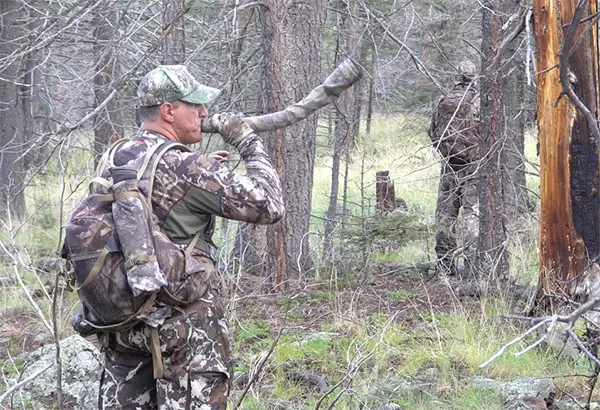
This is what I live for! Yeaaaahh BUDDY! Talking to elk. Speaking their language and becoming intimate with them on their own level is an incredible feeling. This, my friends, is the game changer. A solid calling skill-set is what every elk hunter heading into the woods in September, or even early October, should dedicate as much time to mastering as they do shooting their bow or looking online for that next gadget to make them a better hunter. Calling, using a cow call or even a bugle is a great tool to use for rifle hunters needing to stop an animal for a shot in the later seasons.
It’s no secret. Before you can kill an elk, you have to find one. Luckily, elk help you out by giving away their location with responses to calling during the rut. So the fact that you can get them to tell you where they are is huge. AND, rest assured, that you DO NOT have to be a world champion caller to get a response and call in a bull. But more on that later.
Calling elk is the number one skill-set that allows you, as a hunter, to create your own opportunities. Hunting public land areas with high use and high hunter numbers and a success rate anywhere between 6 to 11 percent in my home state of New Mexico, I have taken 34 elk in the last 36 years with my bow. That’s a 94% success rate. I don’t tell you this to toot my own horn. I tell you this to drive home the number one reason for my success…I have the ability to create opportunities because of my ability to talk to the animals!
Many of today’s elk hunters are missing the point when it comes to calling elk. How many guys do you think are calling elk in September? 80, 85, 95 percent or more? Then why aren’t at least 50% of them killing elk? Sure they are calling, but they’re doing the same thing everyone else is doing…. same calls and strategy no matter what. It’s what they learn from all those cool elk hunting videos. But how effective is it if only 10 percent of hunters are killing elk?
They do the same presentation no matter what time of year, mode of the bulls or type of response they get. It’s the definition of insanity… doing the same thing over and over again and expecting a different result. There is no question that people will kill elk using some of these same strategies. Absolutely some will. There are some incredible, very successful hunters doing it every year. But what about the other 90% of elk hunters that are striking out? Why are they not killing elk? Because they don’t really understand why they are calling. They do the same presentation no matter what time of year, mode of the bulls or type of response. So if they are not able to find that one bull out of ten that wants to play, then they are just out of luck. Literally.
Before we even begin to get into the calls and calling , I am first going to cover the common mistakes to avoid that are made by hunters calling elk or while developing their calling skill set. Next, the goal will be to teach you how to know “WHY” you are calling. Understanding 1) exactly what “A Rut” is, 2) The different phases and modes (pal, lover or fighter) of elk and 3) The calls that are used during those modes. Once you understand the “WHY” of calling, the other questions of “what calls to use” or “when do I use that” begin to answer themselves.
So y’all, let’s get with it!
Because most folks don’t know where to start, they often go to the local sporting goods section, many times only days before the hunt. They look for something that says “elk call” and purchase it without any knowledge of the call or the pros and cons. Most of the time it’s going to be either the cheapest, the easiest one to use, what someone says is the best sounding, or simply… whatever is available.
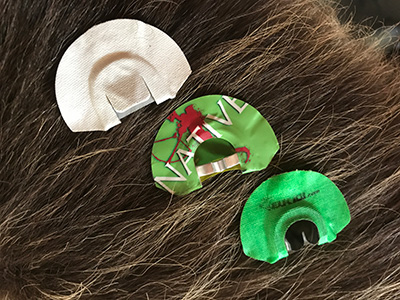 Look, I get it. I was THAT guy. Shoot, for 30 years I was that guy. Fortunately for me, that first call I purchased was a Primos Diaphragm that I could always find in stock at Walmart and it started me on an incredible journey. The issue isn’t about the cost of the call. In the hands of a knowledgeable and experienced elk hunter, any of these calls can be used to locate and often close the deal. But for the inexperienced, they often begin with a call that is limiting or frustrating or both. They either give up on it or set it aside only to work with it just prior to a hunt. This is a formula for failure and further frustration.
Often, the biggest downfall for many elk hunters is that their calling and closing ability is limited because of their equipment. They become a one trick pony. They might have an external bugle that is GREAT at bugling…but that’s all they have. A device that does great, often repetitive, but great bugles. But what do they do once they are in close? Once a bull is in tight, they are now stuck.
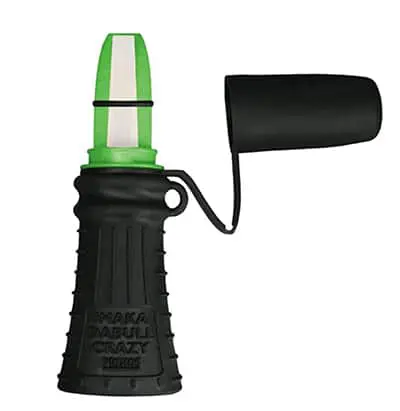 They might have an external cow call, that they heard brings them in EVERY time. That’s GREAT at producing a particular incredible cow sound. Generally a type of “Estrus” or estrus buzz call. Again limiting to situations when bulls are responding to cow sounds. Limiting to that particular cow sound and also very tough to use in close.
A lot of elk hunters will combine the external reed cow call(s) with their external bugle. Now adding more realism and variety to the situation. Especially for someone that learns to vary the calls. I know many a guide that are aces with these in a 2 man setup. But for the Solo hunter, these are still very limiting and difficult too close with. Can it be done? Absolutely, in the right situation. It has been done. But it’s a failure point waiting to happen.
 This is what separates the biggest number of folks when it comes to success percentages! It doesn’t matter what call you do end up with, it’s going to take practice. But if you go with a diaphragm, it’s ALL ABOUT THE PRACTICE! I know that there are many hunters that purchase a diaphragm call and don’t really begin practicing until two weeks before or on the actual ride heading to their hunt location! I know those guys, lol.
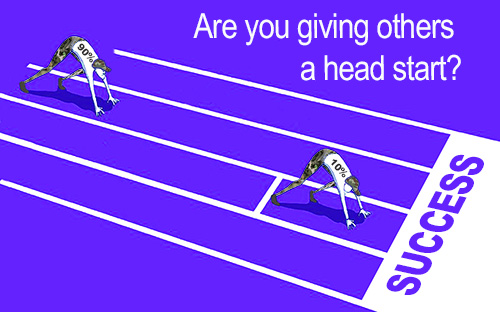
I equate the lack of practicing with your calls to be the same as giving your opponents a 50 meter head start in a 100 meter sprint race. Why would anyone do that? Because so many of us think that there is ‘Plenty of Time’ to prepare. And they are not able to visualize those opponents lining up next to them every time they head into the woods. So they prepare like they are in a vacuum. A recipe for being a day late and a dollar short.
 Everyone wants to directly engage with a bull… Locate Bugle, Locate bugle…Challenge. A challenge bugle is a very small part of our calling…and only used when a bull escalates to that point. This tactic is used so much that bulls can become shy or wary on their approach. Especially after they have been called in and have busted hunters multiple times.
 Hunters that are not able to read a bull’s response or don’t have a grasp on when, why or how to respond in certain situations, will often lead to a blown opportunity or a hunter scratching their head wondering “What in the heck just happened?”.
 So many hunters just don’t know when to move, or understand that they “CAN” move to develop a situation while calling. They get locked into thinking they have to set-up and call the bull to them. No matter the distance or situation. Many just will not move during the set-up. Even though the situation actually calls for another action. Often an aggressive one in order to insure shooting lanes or just an opportunity to be successful.
Understanding that there is a difference between “THE” Rut and “A” Rut is the first step to understanding these critters.
Here’s what I mean. When most people think about THE RUT, they think about that general time of year in elk country from early September to early October when bulls are going nuts, screaming their heads off and chasing cows. It is often seen as an overall phenomenon that effects every bull elk in the country. Like every bull during September is constantly running around fighting off challengers and breeding cows. That is exactly how I use to see it too. But then, years ago I bumped into an an Old-Timer during a hunt. He proceeded to tell me that he knew of A RUT that was happening in a drainage just south of where I was hunting. I was really confused because in my mind “THE RUT” should of been happening…. EVERYWHERE!
Let me tell you, what came out of our discussion became one of those “Ah-Ha” moments that changed the whole way I saw and understood elk behavior. It altered my journey as an elk hunter and helped me to develop hunting and calling strategies that have been paramount to my success over the years.
So let me put it to you as simple as I can;
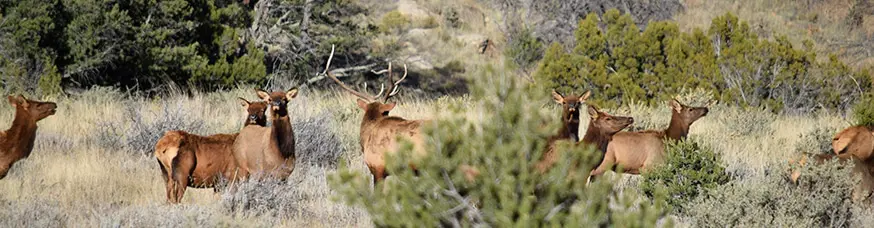
“THE RUT” is that general breeding season, around the Fall Equinox, when bulls want to breed with a cow coming into estrus. Herd bulls will gather cows into what is known as a harem and tend them for days or weeks. If he doesn’t lose them to challengers, he will maintain his herd until each of them at some point comes into estrus.
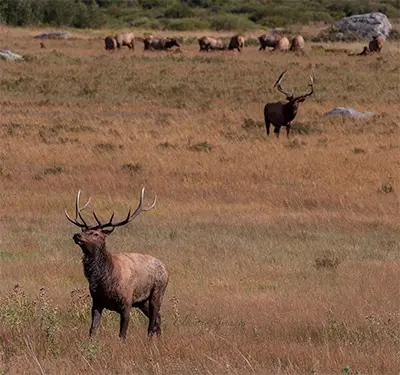
“A RUT” occurs when a cow comes into estrus and the herd bull and other bulls known as “Satellites” begin vocally and physically challenging each other to be able to breed the “hot” cow. Bulls lose their mind at this point and the fights for dominance can become incredibly intense. Even to the point of injury or even death. Any bull within ear shot of multiple bulls screaming in the same area will know immediately that there is a hot cow and will want to join in. Hopefully stealing away a cow or two during all of the commotion. A cow will be in estrus for less than 24 hours and will be bred, depending on the amount of mature bulls in the area, by four to six bulls. At this time, the bulls are Rutting.
THE RUT is a general season when breeding can occur. A RUT is when breeding is happening.
Learning this one little difference totally changed my calling strategies and helped me to be more successful. Because now I had the secret to getting bulls worked up and come in even though they were not themselves rutting or defending a hot cow. It changed what calls I was using and why.
Prior to this, my main calling strategy, like every other hunter in the woods, involved finding a bull that was worked up enough to want to fight another bull. Either a satellite that was frustrated after harassing a herd bull or a herd bull himself that wanted to fight a newcomer. Find that bull, hit him with aggressive challenging bugles and it’s on. The problem with this strategy is that it required me to be lucky enough to be in the area where a cow was in estrus so that the bulls were firing off. If there wasn’t A RUT happening, I was out of luck.
But now I understood that the lack of bugling had nothing to do with the rut being late, or early, or that it was a constant that I should hear occurring everywhere. A RUT simply occurred when a cow came in estrus. Or, at least when other bulls either actually smelled the pheromones from a cow in heat. Or, and this is the secret…also if they heard the sounds of another bull with a hot cow. Listen y’all, every bull in the woods has the same goal. Wanting and searching to breed a cow. So if I created a false scenario, or used multiple calls and sounds that painted the picture of A RUT occurring myself, I could play on a bull’s drive to breed and have bulls come to me. I’m telling you THE LIGHT BULB CAME ON! I no longer had to depend or wait on A RUT. I could create my own!

I break down season into different phases; Early Season, Pre-Rut, Rut Staging, Peak Rut, Post Rut & Late Season
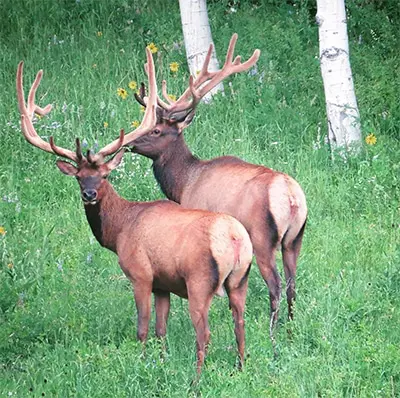
The Early Season Phase is the best time to pattern a bull prior to rut activity. At this point the bulls are bachelored up, still in velvet with horns growing up to 1 inch a day and are feeding all they can to prepare for the upcoming rut. The Rut will take an incredible toll on their body. Bulls will lose about 200lbs of body weight just between early September to late October. Food, water and security are their priorities and they will stay in an area unless something effects one of those needs.
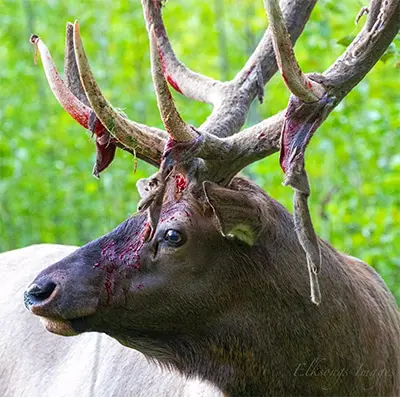
The Pre-Rut Phase is marked by bulls rubbing off their velvet and beginning to spar and set pecking orders. Their testosterone levels are still low and they are more interested in hanging and measuring up the boys than looking for cows. At this time they are beginning a transition or slow migration from their summer refuge towards their more traditional rutting grounds. A bull’s mode at this time is neither a lover nor a fighter. He is in Bro Mode. Like a bunch of guys hanging in the gym and measuring each other up. It is important to note that even at this time or any other phase, if you have a cow that throws a wrench into the buddy buddy system and comes into estrus early, the gym will blow up and “A” RUT occurs. Like my wife says..”Typical Guys”, lol.
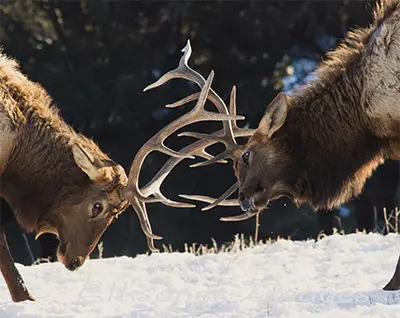
During the Rut Staging Phase, the bigger more mature bulls have begun to split off from their pals. As testosterone levels raise, the mature bulls don’t want to waste energy looking for cows or sparring with other bulls. They know what is coming and they let the young bulls do all the work for them and just wait in the wings. The younger bulls are feeling their oats and sparring becomes more intense and some will begin to try to find and gather a cow or two. They will be very responsive to cow calls in a lover mode, but not too interested in fighting a more aggressive challenger. They will quietly push their cows and try to hold onto them as long as they can. Cow and Bow ( Bull mews) calls, raking and advertising bugles are effective. Also, a hot cow scenario that paints the picture that A RUT is occurring can be very effective at this time and pull in those bulls waiting in the wings into your setup.
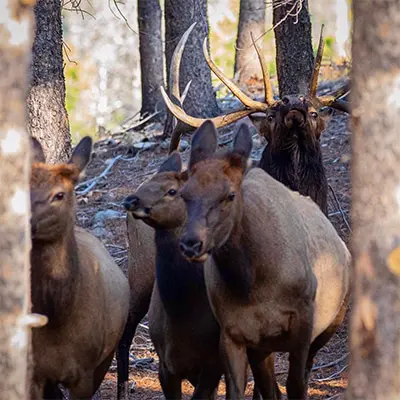
The Peak Rut Phase. Oh my lord thank you for the Peak Rut Phase! It is an unbelievable special time for hearing bugles echo through the woods and for getting responses. Heck, I have had peak rut bulls scream at me when I slammed my truck door! But also understand that getting a herd bull to respond at peak rut does not equate in a shot opportunity. Great for hearing. Not always so good for killing. I equate it to hunting elk in open forest instead of in thick cover. Great for seeing bulls. Not so great at getting them close enough for a shot. The reason being is that Herd bulls are now intently focused on breeding. They have cows that are coming in heat at different times and they DO NOT want to risk losing what they have to go off and chase another bull that is not a clear and present threat. Can a herd bill be killed during this phase? Absolutely. But it takes a solid skill set and you have to be prepared to use different strategies. However, this is a GREAT time to kill a satellite bull that is also harassing the herd bull. Just imagine how hungry they are, after being whipped and frustrated by the herd bull, to have a shot at a lone cow or one that another bull signals as being in heat. Great situation.
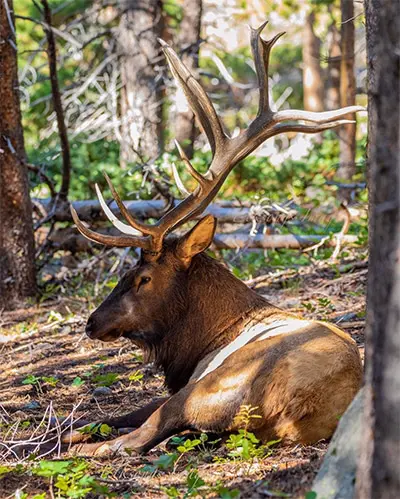
When the bulls are in the Post Rut Phase, beginning around October 8th or 10th, the big bulls have split off and are diving off into holes and not to be found. They are all about recovery now. Security, Rest and Recovery. But that does not mean it’s over as far as the bugling action or even rut action. Cows that have not been bred can come into a second or even third estrus and light things up real quick. Those satellite bulls that were waiting in the wings before are now working on the script for next year. With the herd bull pulling out, they will quickly fill in the void and run the cows now, acting the part and hoping to breed a cow that comes in heat. Bugles will still be heard and locating some quality bulls can still take place. Some of those satellite bulls are really good bulls. But if you are wanting to get one of the big mature herd bulls that have already split off. Find the deepest darkest hole you can find that no-one would ever want to haul a bull out of. Add a water source and a tree choked bench and you have the formula for a big herd bull in recovery. Now you have to let your optics do the work for you and spend hours trying to glass one up. The good news…if you do locate one, he will not be going anywhere real soon. In and out of his sanctuary and that’s about it. Remember, his goal is to recover and expend as little energy as possible.
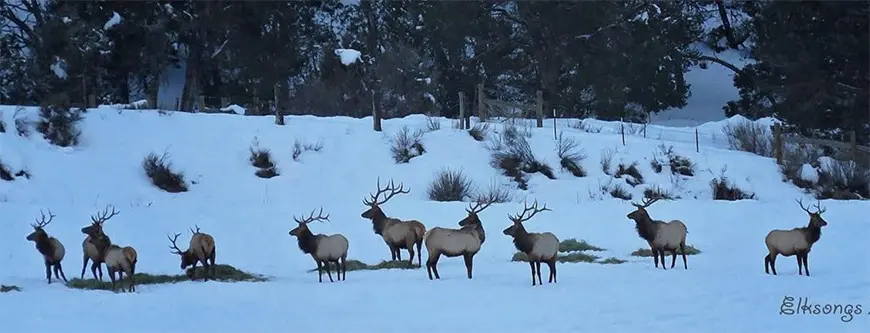
To me, the Late Season Phase rifle hunt is THE best time to harvest a big mature bull. So much so that some States do not have a hunt during this phase. Bulls have recovered and now have to prepare for the winter ahead. That means eat, eat, eat! They have to restore their fuel reserves or they won’t make it. Also, all is forgiven from the battles of the Rut and the bachelor groups are back and the boys are all good again. Buddy pals. But for the late season rifle hunter, this is prime time. The bulls will head to bed later and come out earlier to maximize time feeding. And since they are now in larger groups, hanging out with the boys, they are much easier to spot than when they were holed up by themselves.
Well, when it comes to calling elk, here is the strategy for about 90% of those hitting the woods in September: Walk, drive or ride and then stop to throw out a bugle or a cow call. Wait…..no response…move on and do it again. Over and over. Same bait, same presentation. And just like those fishermen with their go to bait, there are going to be plenty of elk killed with those calls. Absolutely there will be! But this is not about just filling your tag when a bull, on occasion, decides to play. This is about knowing what is happening so you can CREATE more opportunities and fill your tag on a consistent basis.
Understand that this is not about bashing how someone else hunts or chooses to fish. I too love to throw out a line and definitely throw out a bugle. I live for it! But as your elk hunting coach, I want to move you forward. To give you a better grasp of your opponent and give you the knowledge of the game to increase your wins over the woulda – coulda’s.
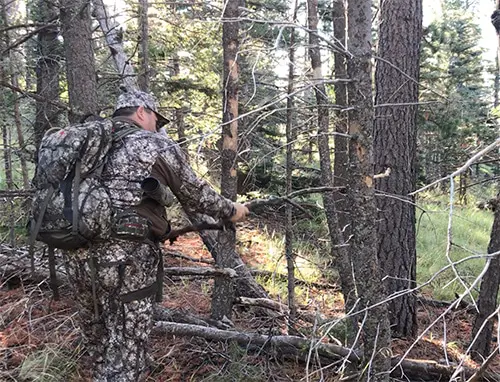
When I am hunting elk, I am targeting bulls. I am using elk calls that are going to elicit some kind of response to let me identify the position of a bull; a bugle, chuckle, grunt, moan, mew or raking. Like I said earlier, half of the battle in killing an elk is first locating one. And yes, you CAN definitely get a response from a bull using a good ol’ location bugle and/or cow call. It is the “Go To” for elk hunters. But there are reasons and times when bulls will “go silent” to some calls. Maybe you are hunting public land where the bulls have already come into those calls and busted hunters a few times and have become “pressured” and educated. Or you unknowingly use an aggressive challenge bugle that an early season bull wants no part of. Or you use a cow call on a bull that just doesn’t care yet and wants no part of you. Maybe it’s a younger bull that wants no part of a bigger, more aggressive bull knowing where he and his girlfriend are. For that matter, it could be an older bull that doesn’t want to expend energy fighting off any bull. So he stays with low level sounds instead of announcing his location. There are a whole list of reasons why things can go quiet.
The problem comes from seeing all of those elk hunting shows or YouTube videos of guys hunting prime time rut, with bulls screaming at any and ALL bugles. It can be special time for getting responses. Heck, I have had peak rut bulls scream at me when I slammed my truck door! But also understand that getting a bull to respond at peak rut does not always equate a shot opportunity. It may be a great time for hearing them. But not always so good for killing them. I equate it to hunting elk in open forest instead of in thick cover. It’s great for seeing bulls. Not so great at getting them close enough for a shot. But I’ll head down that rabbit hole another time.
Here is what I need you to understand, targeting herd bulls or satellites while herded up in the prime rut aren’t the only scenarios that I use when trying to elicit a response. It’s a long season with different phases and depending on the time of the year, and the ‘mode’ or mindset that a bull is ‘most likely’ in at the time, it can be very important to know just what kind of bull you are most likely talking to.
Depending on the time of the season I could be trying to target:
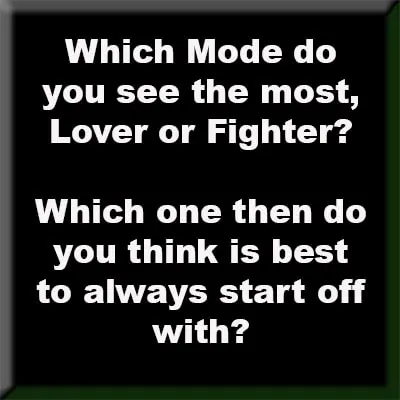
- Bulls looking for a pal (Early Season – Pre-Rut) PAL
- Bulls just advertising their presence (Pre-Rut – Rut Staging – Rut) PAL & LOVER
- Bulls (Mature bulls shadowing early season to Satellites during the rut to Recovery bulls late season) feeding in a corridor to and from bedding areas to night feeding grounds (Pre-Rut – Rut Staging – Rut – Post Rut) PAL , WANNA BE LOVER, WORN OUT FIGHTER
- Bulls looking to fight, spar or set a pecking order (Rut Staging – Rut) FIGHTER
- Bulls looking to gather cows (Rut Staging – Rut) LOVER
- Bulls with cows (Rut Staging – Rut) LOVER, RUNNER OR FIGHTER WHEN PRESSED
- Bulls wanting to breed a hot cow (Rut) LOVER, RUNNER OR FIGHTER IF ENGAGED
(NOTE: I say ‘most likely’, because there are plenty of exceptions to how a bull ‘should’ respond at certain times of the year and if a bull responds with aggression and excitement on September first, when most bulls are still bachelored up and working on the pecking order, it doesn’t matter what time of year it is…IT’S ON!)
What I am going to do is give you a general idea of 1) Time of Year, 2) A Bull’s general mindset during that time and 3) Calls that could be effective with that Mindset. With that said, it is critical that you understand:
- first; it’s cows that come into estrus that trigger a rut…
- second; the fall equinox (Sept. 21st/22nd) is what triggers cows to go into estrus…some will come in many days earlier and some many days later, not all at the same time. The very reason a bull creates and tends a harem.
- And third; if a cow is not bred efficiently, she can come back into estrus multiple times until she is. Thus creating later sporadic ruts.
It is also important for you to understand, as with the cows, there is no line in the sand as to the when all bulls are in a certain mode or mindset. A certain bull’s rise in testosterone can lead to more aggressive acts while other bulls just aren’t there yet. Don’t look at these as an across the board happening. Each elk has a different personality and temperament. That is why you will see multiple possible modes or mindsets during certain times with a blending. It will be a bull’s response that will really tell you how to move forward and what kind of bull you are talking to.
 Up first, some ElkBros thought processes to get your head right. But before we dive in, we want to point out that there are many ways to achieve a goal. There are plenty of very successful hunters out there that have a different style or approach than what we do. We are not here to say they are wrong or bash others for what they do. This is just what we do. What works for us and what has brought us so much success over the years. Again, my goal is to share with you over 40 years of experience from my hunting and coaching perspective. With that said, let’s get this lined out!
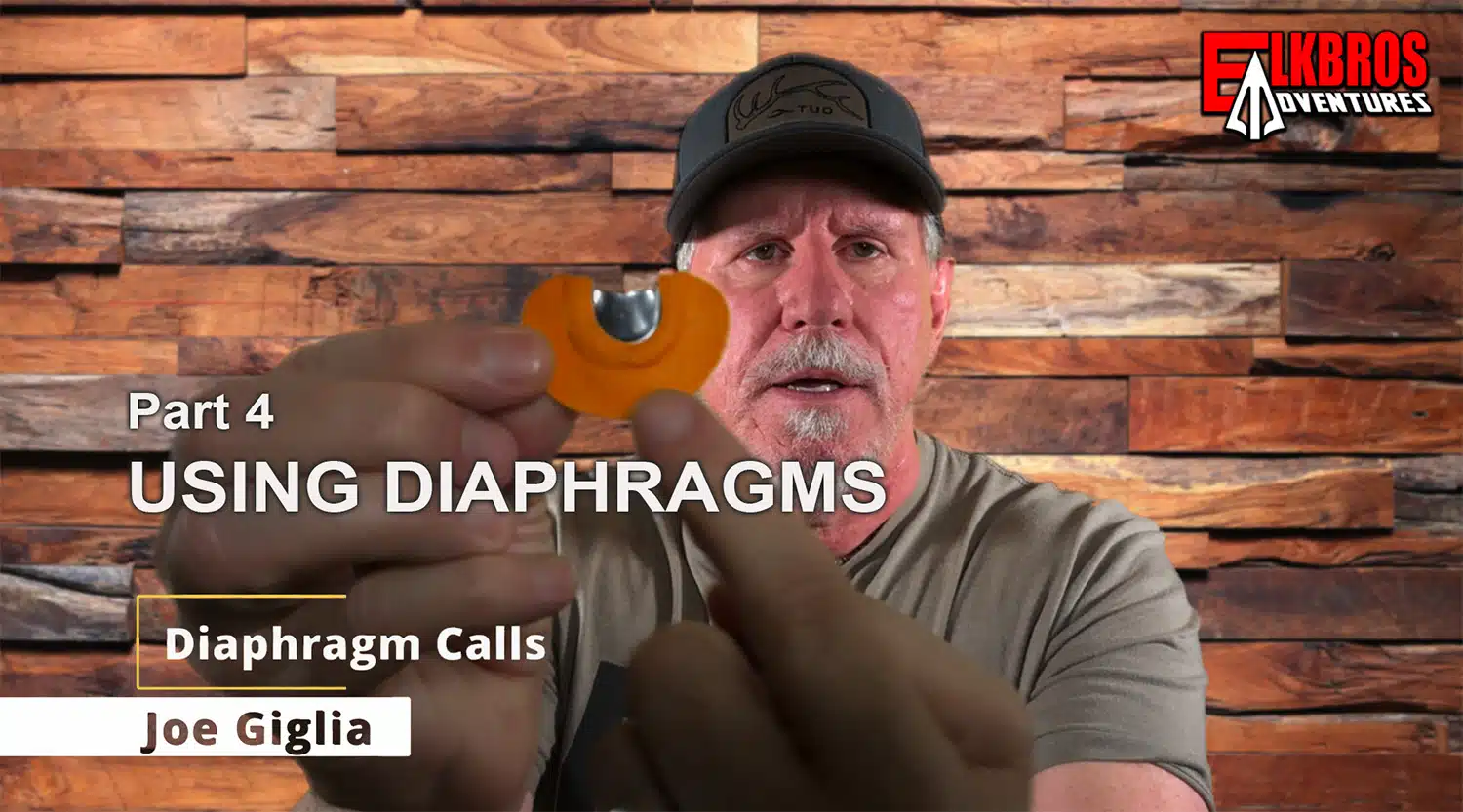
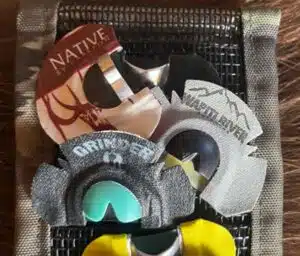 We are going to talk a lot more about the different types of calls used for reproducing elk sounds, but at this point, we want to simplify the thought process concerning what we use and why. Even though some of the guys have used different external calls in the past, I have always used nothing but mouth diaphragms to call elk. I prefer diaphragms with a palette plate, dome or strip to also simplify fit, form and function. Diaphragms allow me to make pretty much any elk vocalization there is, while also keeping my hands free, which is huge. I don’t want to be reaching for different calls or having to get them out of the way when things get up close and personal. I TRULEY believe diaphragm calls and my ability to use them are a MAJOR reason for my consistent success.
SIMPLY: IF YOU WANT TO BE MORE SUCCESSFUL, LEARN TO USE AND MASTER DIAPHRAGM CALLS!
Diaphragms are in your mouth and ready at any time for multiple purposes:
- Locate & Call in
- Mask your noise and movement in the woods
- Stop an animal for the shot
- Cover a draw
- Confuse a hit bull and keep him from running off
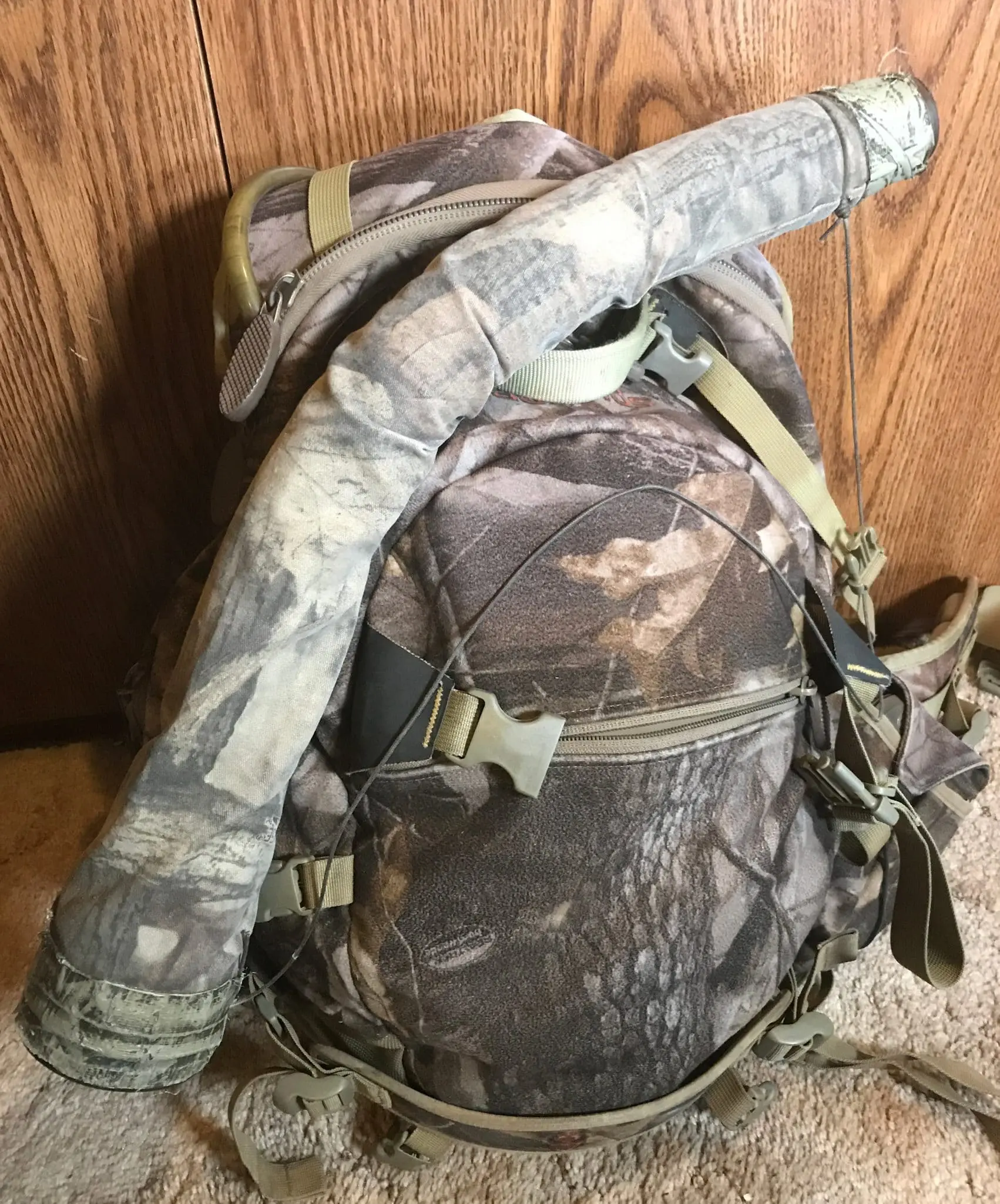
Diaphragms are used in your mouth to create the sounds, while a GRUNT TUBE is used to project and even direct the sounds you create with the diaphragm and give it a more realistic resonance. There are all kinds of Grunt Tubes out there, but we use a flexible grunt tube that can wrap around our body and be easily stored and put into action with minimum movement. It also allows us to throw calls behind us while facing forward in shooting position.
After looking over our ElkBros Philosophy, you have a more simplified roadmap for calling:
- When we call we want to always be a “LOVER” before a “FIGHTER”. That translates to Cow Calls first followed by non-threatening bull vocalizations.
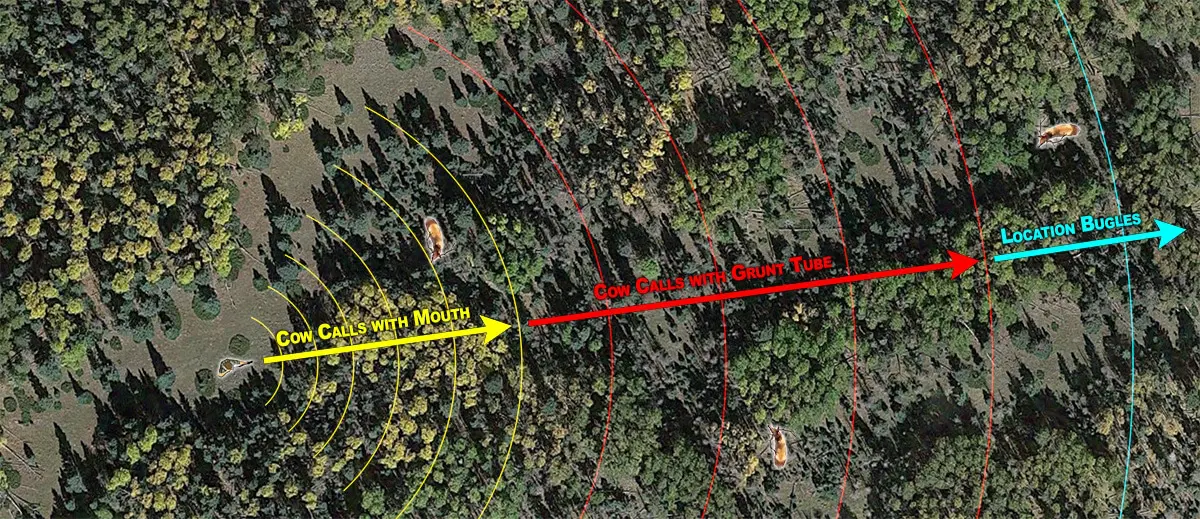
- Then, we always call from NEAR to FAR. That way we are checking the area in close proximity before we reach out. That translates to:
- Cow Calls without a tube, softer then a little louder.
- Add the Grunt Tube to reach out with Cow Calls.
- Reach out farther with Location bugles
Now that you understand the “WHY” of calling and your “Goal Intentions” when calling, I want to take you to a more advanced concept involving Scenarios. I want to introduce you to what I believe is the game changer that separates what I do from the same ol’ rodeo…. “Non-Engaging” Scenarios. So here we go!
Just about all calling is Scenario driven in some way. We all use calls to paint an image into our target bull’s head to get him to come to us. (Sounding like a cow or group of cows as you walk… A bull advertising… location bugle… a defensive, angry bull…challenge bugle, etc.) Scenarios can engage your target bull ( cow calling to the bull, chuckling at or challenging, etc) or be “Non-Engaging” by painting the illusion of your own little world that does not involve the target bull. Not yet, anyway.
When the right situation presents itself, many of our scenarios start out as being NON-ENGAGING. They are not meant to engage our target animal… THAT IS until he has escalated for engagement. We think this strategy is the most underused, overlooked and deadly.
Let me explain a little better.
When you look at the five “Goal Intentions” above, we have one titled “Exclude”. When we Exclude or “Snub” our target bull, we are portraying ourselves as another group of elk that are only engaging with each other.
Whether that engaging is normal herd activity, breeding, challenging or fighting, we are not timing our calls in response to our target bull’s vocalizations. We are staying within our own little scenario, like actors in a play, responding to our OWN vocalizations. Acting like our target bull DOESN’T EVEN EXIST. When we do this, our bull doesn’t feel threatened in any way. He is drawn by instinct, his current mode or drive.
Many times we may not even know if a target bull exists for sure. We could be moving through a transition area and seeing fresh sign. Or we just got a strong snootful of elk scent or have heard a low audible noise we assume could be an elk. In those cases, we would do a scenario to see if we can get a bull to respond either audibly or silently. Basically chumming the water to see what comes in or gives away their presence.
Other times, we may have a visual on an animal or have heard them bugle from a location that is difficult to approach or may even be from property on the other side of a fence that is not part of our licensed area to hunt. Look, elk travel miles to find other elk for various reasons. Just because they are in another location screaming their heads off, doesn’t mean you can’t bring them to your location. You just have to give them a reason!
Now that you understand that, let’s talk about painting!
What do we mean by painting a picture with our calling? A painting is a 2 dimensional object that gives the illusion of 3 dimensions. Artists blend the colors of their palette to create an imaginary person, place or thing. Thus fooling the viewer into seeing what they, the artist, wants them to see. The more advanced artists are with their paints, brushes and their subject matter, the easier it is for them to sell the illusion.
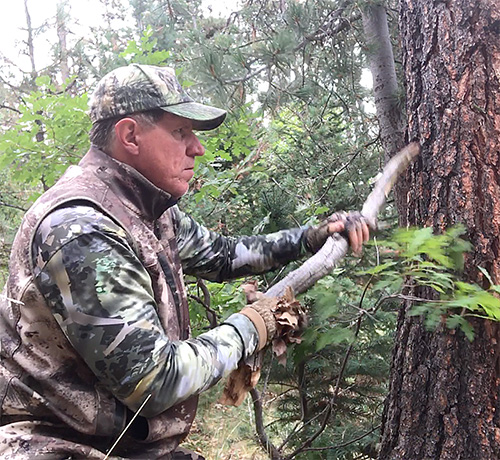 We can do the exact same thing when calling elk using a Scenario. By using the different elk sounds of our artist’s palette, along with our set-up location as our canvas, we can create an audible illusion that will make a target bull want to come to us. We want to bring a bull into shooting range with what he believes is another elk, or group of elk, acting in a certain way that appeals, as I said before, to his instincts, mode or drive at the time. That is the Scenario or picture we paint.
Below, I have given you what I feel are the Elk Situational Sketches or Portrayals that you most want to use. Each can apply to multiple situations and to bulls in different modes by pushing different buttons. By having a set idea of the picture you are painting, it helps take out the guesswork in picking your sounds from your palette and having a plan. Knowing exactly how you are communicating by the painting you choose to portray.
The beauty of each Portrait or Painting is that it’s an illusion that can change with the reaction, or lack of a reaction. Like smoke in the wind, elk calling is dynamic. Ever changing to the current variables of the situation and the reactions of your target animal.
However, even though it is dynamic, just by knowing the basic Elk Interactions in our “Situational Sketches”, you can switch easily from one portrait to another. Just by introducing new sounds from your palette.
We use the “Elk Situational Sketches” below as part of our dynamic calling situations throughout the hunt as well as a basis for our Static “Snub” based calling Scenarios. You can think of these “Sketches” as individual “Modules” that can each be used on their own or combined together for the larger scenario that we are wanting to portray.
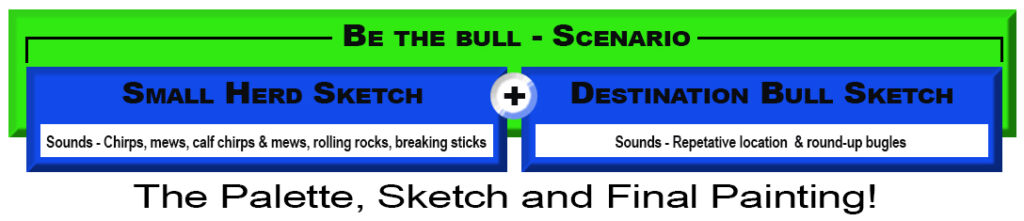
 This right here is the beauty of Scenario Calling… you get to pick the playing field, your “CANVAS” to begin the game. Giving you a huge advantage because your target animal will be the one moving, with you still and watching. The hardest time for an elk to see movement is when they themselves are moving. When they are moving, now everything around them is moving as well. Their line of sight is constantly changing. Anytime you can create a situation to where the elk is moving into you, you have just increased your chances dramatically.
However, one important thing to remember is that even though you get to select the original playing field, this is elk hunting and the best laid plans can change in a heart beat. Especially for someone as attention deficit as I am. It’s so hard for me to not bail and chase a bugle. But you can bet your last dollar that if I have a bull being verbal, that I know is coming in and then he changes and the bugles start going away, I’m absolutely leaving and going after him. With that said, if I have a verbal bull… and he is responding to the scenario, even if he goes silent I have to show patience and allow my set-up to work. My “Canvas”, the location I select to paint my scenario, gives me an added advantage. By design, it should give me the best shot opportunity.
What Helps To Determine Your Canvas?
When, where and how you select your canvas is going to be based on several factors that I will discuss more below. But it basically comes down to your current or known situation, your level of information and both the hunt type and physical environment. Each of these factors will all be combined together to contribute information that will guide your decision, or in some cases, make the decision for you.
For example: You could have a visual on a target bull and have the perfect spot for a scenario when it comes to terrain and shooting lanes. But if the wind is wrong… it’s simply a no-go and you will have to rethink the situation and the location for determining your Canvas.
Current or Known Situations
There are going to be certain reasons that you decide to put on a scenario: 1) You hear elk or have a visual. 2)You know they are close… you smell elk or have fresh sign, or 3) You have a location that you believe they are nearby, using or coming to or through… a water source, feed area, bedding area, travel corridor. Each of these will have an effect on the time you have and the levels of choice for your “Canvas”, the location you select to paint your scenario.
Hunt Type & Physical Environment
Your Hunt Type; “Archery or Rifle” or with a “Partner or Solo”, will absolutely impact your set-up decisions with the wind, terrain and vegetation being the biggest factors for each. No matter what, never forget that the wind is the number one consideration for ANY AND ALL HUNT TYPES. You will NOT fool an elk’s nose. If they smell you, they will be gone, that simple.
Archery or Rifle? Two different modes with two different goals. With archery, you want it thick and as tight as possible to force your target animal to come into your effective shooting range. This can be accomplished by using both terrain features or vegetation. One of my favorite places to hunt elk in in thick oak brush groves. I have had elk within 25 to 30 yards that were totally screened from me. Allowing me to move and find the shooting lanes that the bull would have to come into or cross in order to find the elk that it thinks it’s looking for. In the oak brush, it’s not unusual for my shots to be as close as 10 to 20 yards.
However, when hunting with a rifle, you want it open and visual due to the very nature of the weapon and it’s ability to kill at long distances. You have to be able to verify your background before pulling the trigger. You are wanting overlooks that give you a downward angle or across from one hillside to another (never skylined!). Or from a lower position up towards a hillside or any position that your target bull has a solid backdrop.
Solo or with a Partner?
When you are Solo, you are both the caller AND the shooter. With that said, let me make sure I introduce you to the “Stop & Scan Line”. Imagine you have an elk answering your cow calls and coming into you. In this first scenario, you are set up with a solid back drop. In the direction the bull is coming from, there are a lot of big old pines. More like dark timber keeping the area shaded. You can see without obstructions until a thick screen of Jack Pines and brush about 70 yards out.
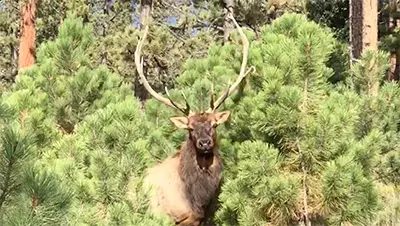 The bull was bout 150 yards out and coming fast. You cow call, he bugles. Just what the doctor ordered! You can’t see him yet but…. WHOA! You see horn tips coming through the Jack Pines 70 yards out! You’re turning your body for optimum shooting range and form. Your mind is racing taking in the situation when the bull steps through the Jack Pines just enough for him to have a clear view. He is frozen looking your way with his eyes and ears straining to locate the cow that he KNOWS is right here. He is offering a good shot angle but about 20 yards out of your effective range. You are now a victim of the “Stop & Scan Line”.
You’re thinking you shouldn’t call, because you know he will peg you for sure. It seems like forever and then he screams a bugle! Staying silent, you see his ears moving from front to the sides, still staring your way he gets a little antsy and turns with an even better shot angle. Now he “Bark Chuckles”, basically demanding for the cow to show herself. How DARE she call me all this way and then hide! Not seeing or hearing anything, he takes a step back, turns and walks back the way he came.
Your first reaction is to cow call to bring him back. And guess what? He Does! And he stops at the EXACT spot he stopped before! DANG IT! WHY?
Stop & Scan Line Explained.
So, if you haven’t figured out what is happening yet, let me explain. Somewhat like humans, Elk are visual communicators first and foremost. When they are out of visual contact, they use vocalizations. Again, much like humans. Just imagine that someone has been calling out to you from a room. Someone that you don’t know, so you go to see whom it is… visually. You get there and the room is empty? Okay, now your freaked out. You call out to whomever is there and… nothing. You’re out of there, right? Absolutely!
The same for elk. With that said, when you are in a set-up, you have to look for those “doors” into your room and MAKE SURE that the doorway, that “Stop & Scan Line” is within your effective shooting range.
Let’s reconsider that first scenario. Had you realized that the area in front of you was wide open for seventy yards and chosen to silently and quickly move forward 30 yards, then the ending would have been totally different. Now you have a 40 yard shot totally within your effective shooting range.
In the first scenario, it was the vegetation that determined the “Stop & Scan Line”. Now let’s look at terrain.
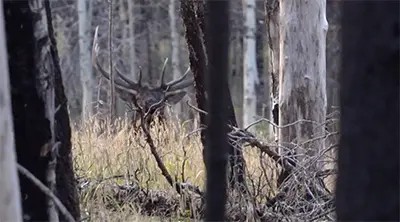 Same scenario as before. Except instead of thick vegetation and Jack Pines 70 yards off, there is a drop off down the side of a ridge. But in this scenario you hear the bull’s bugle and getting a line on his direction and realizing you are still seventy yards from where he will come over the rise, you quickly move ahead 40 yards and slightly to the downwind side. You have just moved into position with a big pine for a backdrop when you see horn tips coming over the rise! You draw back and sure as shootin’, the bull comes just to the top of the rise, his Stop and Scan Line, looking to your right at 30 yards. He is slightly quartering to you, so straight up the leg , mid body and… the happy dance! (*NOTE* When a bull is broadside, I am mid body about 3 to four inches behind the crease. But in this case, the slight quarter will change the point of impact for maximum penetration through the lungs. ALWAYS pay attention to angles!)
When you are with a Partner things are a lot different because now you have two distinct roles; shooter and caller. A deadly combination! You have so many more choices because the caller can “pull” or “draw” the bull past the shooter or into shooting range. As the shooter, you only need to worry about a good backdrop and being on the downside wind of the bull’s approach and solid shooting lanes. Let’s repeat that: 1) Downwind side. 2) Backdrop to break up your silhouette. 3) Solid Shooting Lanes.
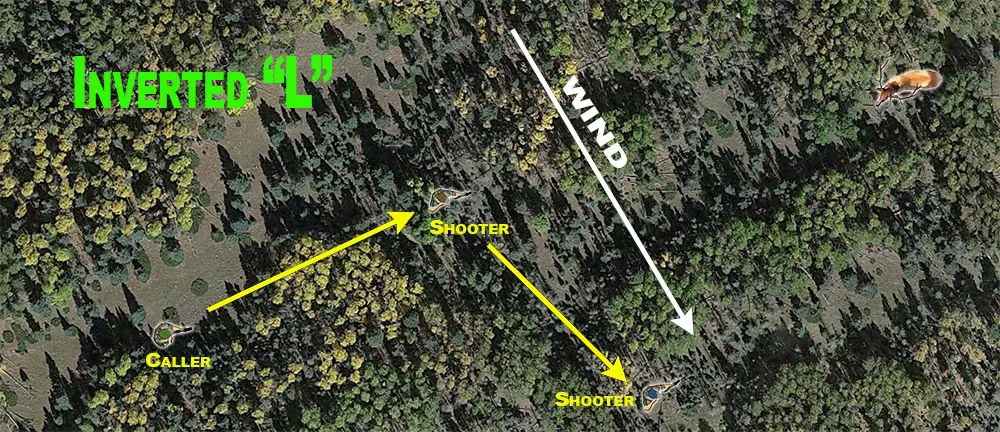 As shown in the Set-Up Module, think of yourself as a wide receiver with your favorite football team ( Most likely the Carolina Panthers!) running an out-route. Basically an inverted “L”, where you go directly in line towards the bull and then 10 to 20 yards to the downwind side. This could happen in reverse as well if the caller has you get setup and then he or she moves back accordingly to bring the bull to your downwind side. The location, vegetation, terrain and situation will dictate which of the two techniques you use.
At this point you have heard the sounds elk produce ( you can click the button below to revisit) and you have a better grasp of why and in what situations you will use them. The sounds have relevance to you. Now it’s time to learn how to create those sounds. Yep, Let’s learn how to Call!
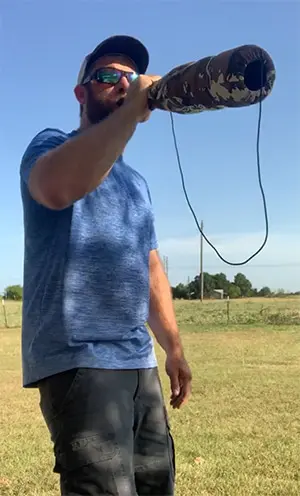
Let’ start off with the right mindset. Most other hunters wait until the season is almost on them before they start working to expand their call knowledge and practice their calling. They will shoot everyday, but there are a ton of hunters that will actually wait until the long drive heading out west to hunt before they really focus on practicing their calling. This is the EXACT reason that they often find themselves in situations where they struggle, make the wrong calls or they are limited in knowing when, how or why to respond to an elk in any given situation. Being confident in your shooting is imperative. But if you are not able to create your opportunities to get that bull in for a shot… the shooting aspect never comes into play.
As your Coach, I want you to work at your calling because I know first hand how much of a game changer it is. There is no magic wand. It takes work and you will only get out of it, what you put into it. At the minimum, put in as little as 15 minutes a day, or 1 hour a week into practicing your calling. “At least” one hour a week, review the material above to become a student of the animal you are hunting. If you put as much time into learning to speak the language, understanding what a bull elk is saying, why he responding and what your appropriate response should be to get that bull within your confident range, you too could be celebrating this coming season as one of those effecting the success percentages to the positive side. How cool would that be!
When it comes to elk calls, the market is flooded with such a variety that it can become mind boggling and intimidating to any elk hunter, let alone a first timer. But before I begin simplifying the process, I want to make a point that until the last four years I had taken 30 elk with my bow and all of them basically with the same model of diaphragm call from the same company. There were nowhere near the choices years ago that there are today, so I went with what was available. It was what they had at Walmart. It was inexpensive and it worked. It fit all of the ElkBros Grinder criteria! Sure, there were some that I had to throw away brand new and that I had to work and “tune”. But that was just part of it.
In the last four years, with the expansion of choices, the development of ElkBros and as a professional guide, I have been exploring other makes and models of diaphragms and have had great success with them as well. But understand, the calls are just a tool. Yes, some tools are better or more reliable than others but the success comes from the hunter’s knowledge and skill in using them.
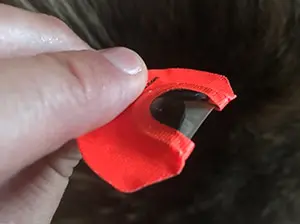
The three main basic types of calls are:
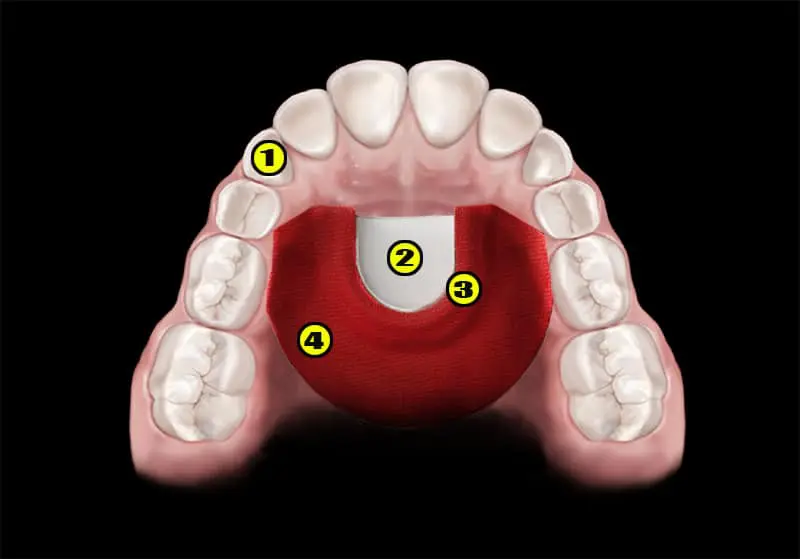
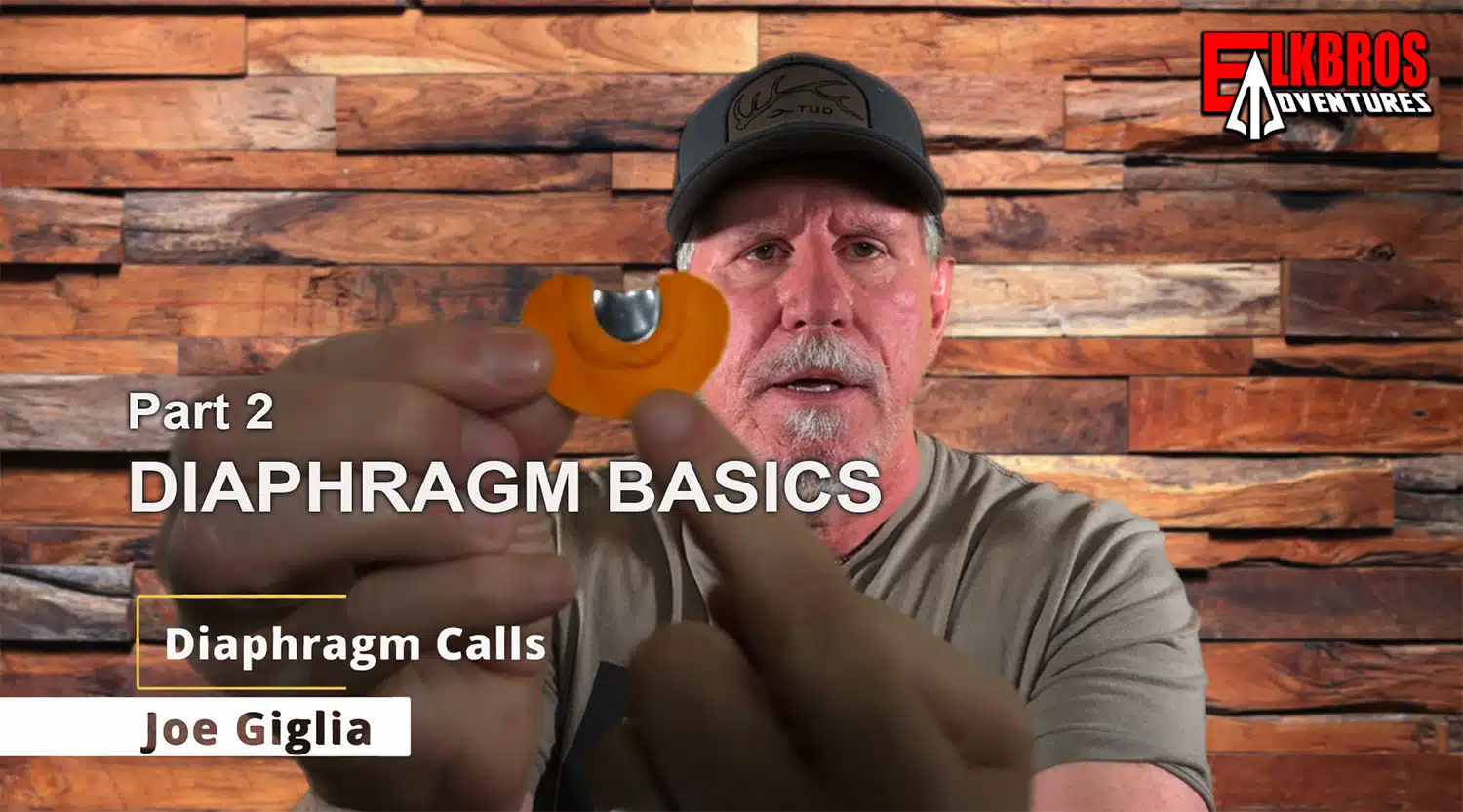
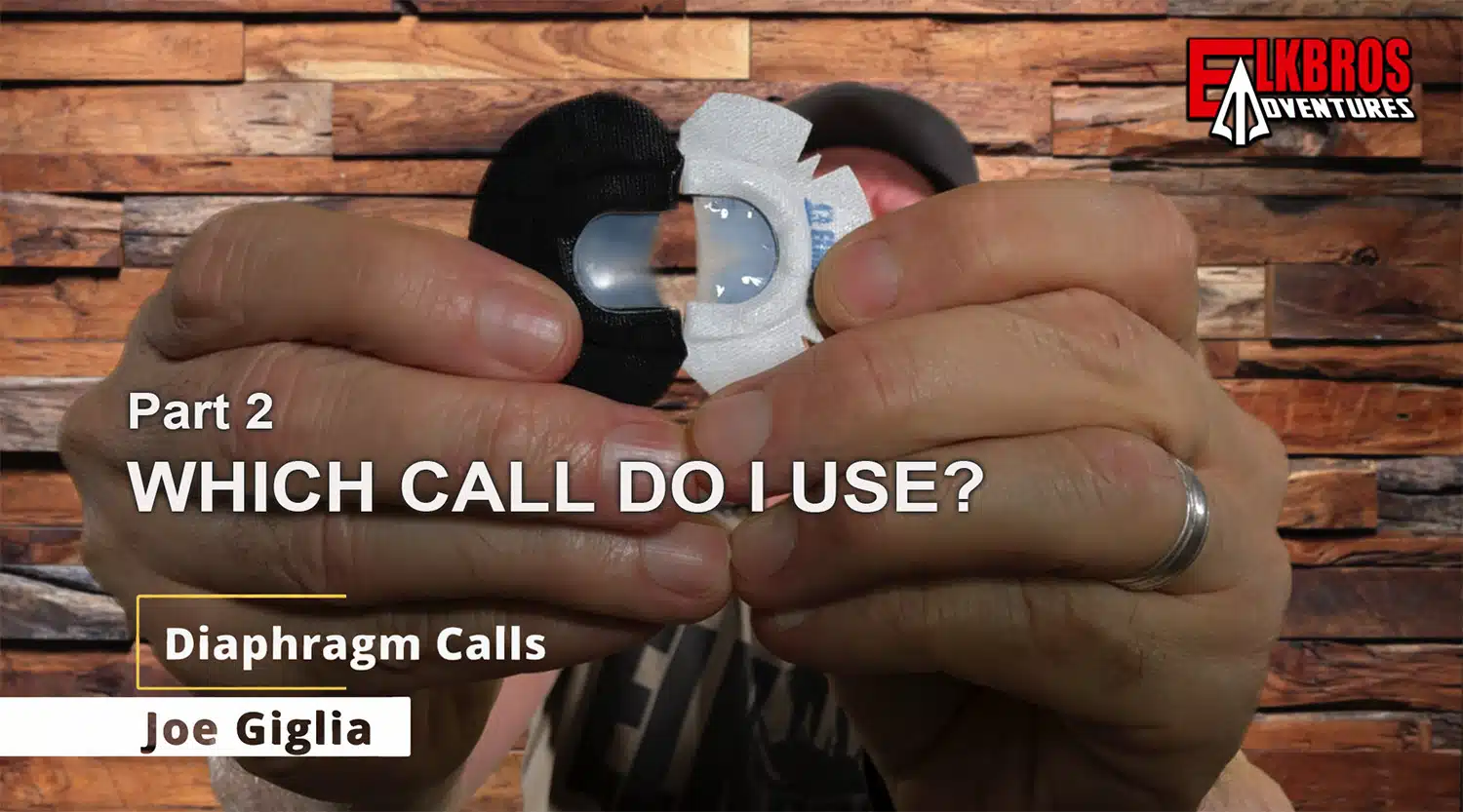
- Mouth Diaphragms – My call of choice. These are made of a small “U” shaped metal or plastic frame that holds one or several layers of latex (that can come in different thicknesses) and covered outside of the latex and on the frame with a mouth tape skirting material designed to create a seal in the top roof of the palette in your mouth. You produce the sounds by exhaling air between the latex and your tongue. A mouth diaphragm is used with a Grunt Tube, a plastic tube designed to give your calls a more realistic resonance and volume.
- External reeds – Like diaphragm calls, there are a ton of different external cow and bull elk calls. All kinds of styles, shapes and configurations. The most recognized are the cow calls that look similar in design to duck, goose or predator calls. The bull calls look similar to a plain grunt tube, but have some type of insert or apparatus to produce the sounds when blown.
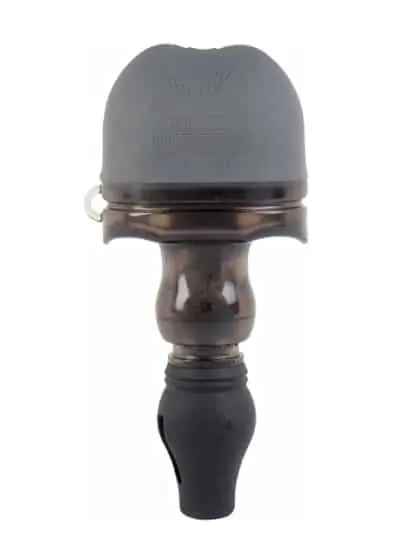
- Mechanical or squeeze type calls – Probably the best known in this category is the Primos Hoochie Mama call. Our own ElkBros coach, Chav, used a Hoochie Mama for years. It has a rubber bulb chamber that when squeezed, produces a cow call. I don’t know of any calls in this category that can produce a bull call.
All of the above calls can bring in elk and for those people that really struggle or have no desire to learn how to use a diaphragm reed, they become a great alternative. Many of the external reed cow calls sound incredible. Honestly, I think better than any cow call I produce with my mouth diaphragm.
So why don’t I use an Eternal Reed call?
The trade off for me is all about time, variety and having my hands free. Again, identify possible areas of failure and overcome them. If I have a spur of the moment situation, which happens so much with elk, my diaphragm is in my mouth and ready. No fumbling or movement to catch the animals attention or time wasted. I am call ready.
The mouth diaphragm is an all in one solution. I can produce every elk sound I need and do it with changes in length, pitch and volume. With one reed, I can sound like multiple animals. Something that is extremely hard to do with externals just by the design of the call.
Lastly, having my hands on my bow ready to shoot and being able to do a cow call, or stop a bull at full draw with a bugle has been the key to a lot of successful endings. Something that could not or would not have happened with any other type of call.
Series 1 - Diaphragm Calls
4 Videos
Calling Basics
13 Videos